

The first few minutes after lunch can disappear before the lesson even starts. One student needs water, two are still arguing about the playground, and the rest of the class is talking over you.
You can spend those minutes asking everyone to sit down and be quiet, or you can make the return from lunch predictable.
A predictable routine means students already know what happens next: they come in, settle, start a simple task, and get ready for the lesson. Rather than expecting everyone to switch from playground mode to learning mode at once, you give them a few small steps to follow.
Each step helps students settle a little more, making the transition back to learning easier for the whole class. Here’s a five-minute routine you can use from the moment students reach the classroom door.
Post Recess Classroom Routine
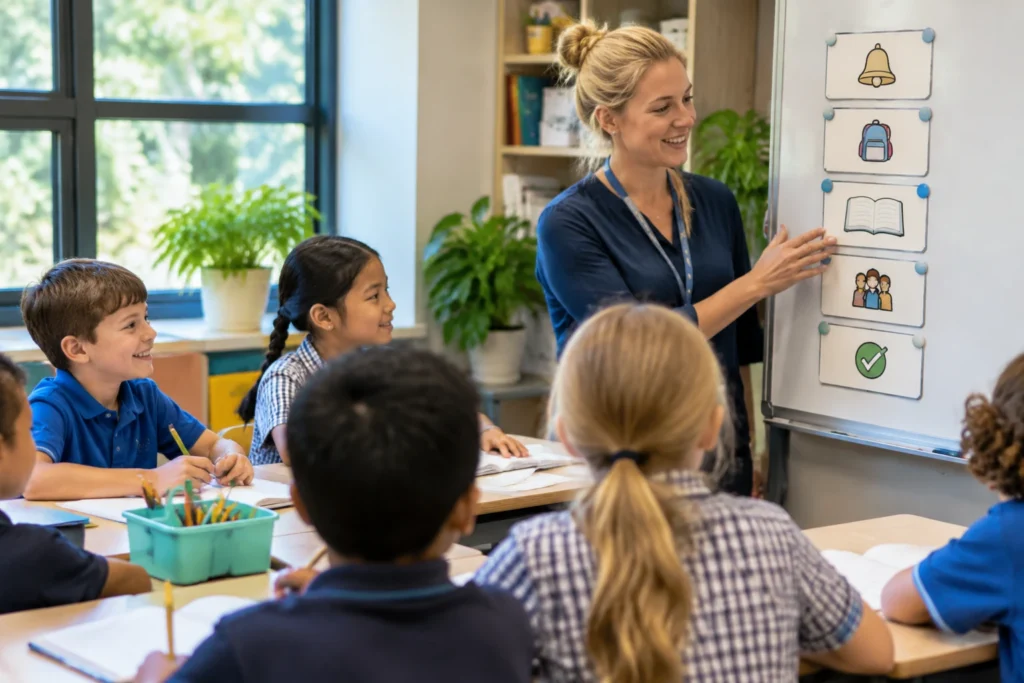
A predictable classroom transition after lunch makes settling students after break easier. It also helps create a more positive learning environment by making the transition less chaotic and easier to manage. Follow these five steps to get your class settled and ready for the next lesson.
1. Meet Students at the Door
Before lunch ends, wait for students at the classroom door. Greet each one briefly as they come in, and pay attention to how they look and sound. If someone is upset, overexcited or still caught up in an argument from the playground, you can deal with that quietly before they reach their desk.
You don’t need to have a conversation with every student. A quick greeting is enough to acknowledge them and give you a chance to spot anyone who may need a little more help settling in
2. Use One Signal to Start
Once students are inside, use the same signal every day to let them know it’s time to settle and get ready for the lesson.
It could be a chime, a raised hand or a short countdown. The important part is that students know what the signal means.
If you find yourself saying “eyes up here” several times before anyone responds, the signal isn’t doing enough work. Give it once, then wait.
The silence may feel awkward at first. Resist filling it immediately. Students need a chance to respond to the cue rather than learning that they can wait for you to repeat it.
3. Put the First Task on Every Desk
I’ve found that students settle much faster when they have something to work on as soon as they sit down. Otherwise, even a short wait can turn into another round of playground conversations.
So before students return from lunch, place a short, familiar task on each desk or display it on the board. It should be something they can begin without asking what to do.
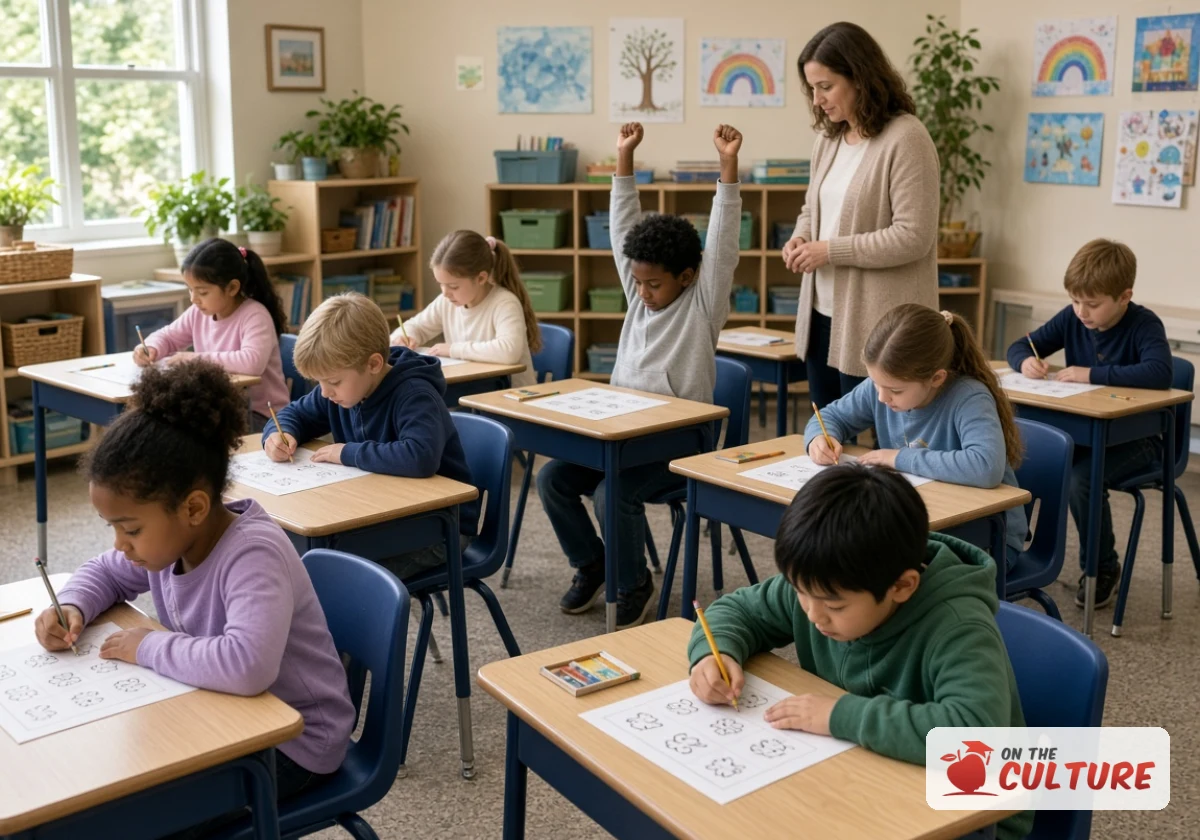
Two review questions, a quick sketch, a short reading task or a few vocabulary prompts can all work. The task doesn’t need to be difficult. It needs to give students something clear to do while you finish settling the room.
Keep the instructions visible on the board or desk, especially for younger students.
The goal is to remove the empty space between “sit down” and “the lesson starts.” That gives students a clear next step instead of leaving them waiting with nothing to do.
4. Give Them a Short Reset
Sometimes, students can still feel restless or distracted even after lunch has ended. They’ve just had a break from the classroom, and settling straight into another lesson can take a little time.
A short reset can help them shift their attention back to learning. For example, you could give them a minute to get water, stretch at their desks, or simply finish their opening task without conversation.
Just keep it short and consistent. A visible one- or two-minute timer helps students know how long they have before the lesson begins.
And once the timer runs out, bring everyone’s attention back to the lesson and continue with your planned activities.
5. Check the Room Before Starting New Content
Before jumping into the lesson, take a moment to see how everyone is doing. Are most students ready to listen? Has everyone settled down, or is someone still struggling to get back into the routine?
If one student is still upset, unusually quiet or struggling to settle, you can deal with that separately rather than stopping the whole class.
You can also give everyone another minute of quiet work if the room still feels unsettled. Once students are ready, move into the main lesson.
The routine doesn’t have to run to an exact five-minute stopwatch every day. Its value comes from the predictable sequence.

Classroom Refocusing Activities Students Can Do While They Settle
Once you’ve prepared a task for students, the next question is what to give them. Here are a few ideas you can rotate throughout the week:
- Two-question Review: Write two questions from the previous lesson on the board for students to answer independently.
- Quick Sketch: A simple drawing and a few labels connected to the morning’s learning can help students recall what they’ve covered.
- Short Reading: Leave a familiar book or short passage ready for quiet reading.
- Finish the Sentence: Display two or three sentence starters linked to the day’s topic for students to complete.
- One-minute Reflection: Invite students to write one thing they remember from the previous lesson or one question they still have.
- Vocabulary Match: Students match a few familiar terms with their definitions or examples.
You don’t have to come up with something new every day, either. Once students become familiar with a few activities, they’ll know what to do as soon as they sit down.
Settling the Student Who Returns Angry, Upset, or Overloaded
A predictable routine can settle most of the room while one student still needs help.
Maybe something happened during lunch. There was an argument with a friend, a disagreement during a game or simply too much noise and activity. Whatever the reason, that student might need a little more time and attention before they’re ready to join the lesson.
You can use these methods to help calm them down.
Give Them a Quiet Option
If your classroom has a suitable quiet space, let the student use it for a short period without presenting it as punishment.
A comfortable seat, a timer or a simple visual cue can help them understand that they have a little time and space to settle.
The important part is knowing when they will rejoin the lesson. A quiet space works better when it has a beginning and an end.
Talk After They’ve Settled
You don’t need to investigate the whole situation while the student is still upset.
Once they’ve had time to settle, speak privately. Give them a chance to explain what happened, and listen before deciding what needs to happen next.
If the incident involves another student, record the details and follow your school’s process for passing the issue to the appropriate staff member.
Give Them Something Useful to Do
Some students settle more easily when they have a small, purposeful job.
They might hand out books, collect materials or wipe the board before returning to their seat. Keep the job short enough that it doesn’t become an escape from the lesson.
And pay attention if the same student struggles after lunch repeatedly. Note when the problem starts, what tends to happen beforehand and whether particular situations or classmates are involved. These small steps can support your behavior management approach while giving individual students the attention they need.
Why the Routine Helps
Think about what students get from their break. They have time to move around, catch up with friends and take a break from classroom activities. Those opportunities are important, too.
In fact, the CDC’s guidance on recess explains how these breaks support more than physical activity. They can improve students’ memory, attention and concentration, help them stay on task and reduce disruptive classroom behaviour.
So, when students return, give them a little time to settle before moving into the next lesson. A familiar sequence makes this easier because they already know what to do. They come in, respond to your signal, work on their opening task and get ready for the lesson.
It might take a few reminders at first, but students will gradually become familiar with the routine. Eventually, you won’t have to explain every step or repeat the same instructions each afternoon. That leaves you with more time to focus on teaching.
Make the First Five Minutes the Easiest Part of Your Afternoon
You don’t need a complicated behaviour system to improve the return from lunch.
Start with three things: meet students at the door, use the same signal every day and have a simple task waiting on their desks.
Once those habits are familiar, add the short reset and a quick check of the room.
The aim is to stop the first five minutes from becoming a daily battle over where students should be and what they should be doing.
Want more tips like this? Visit On the Culture.