
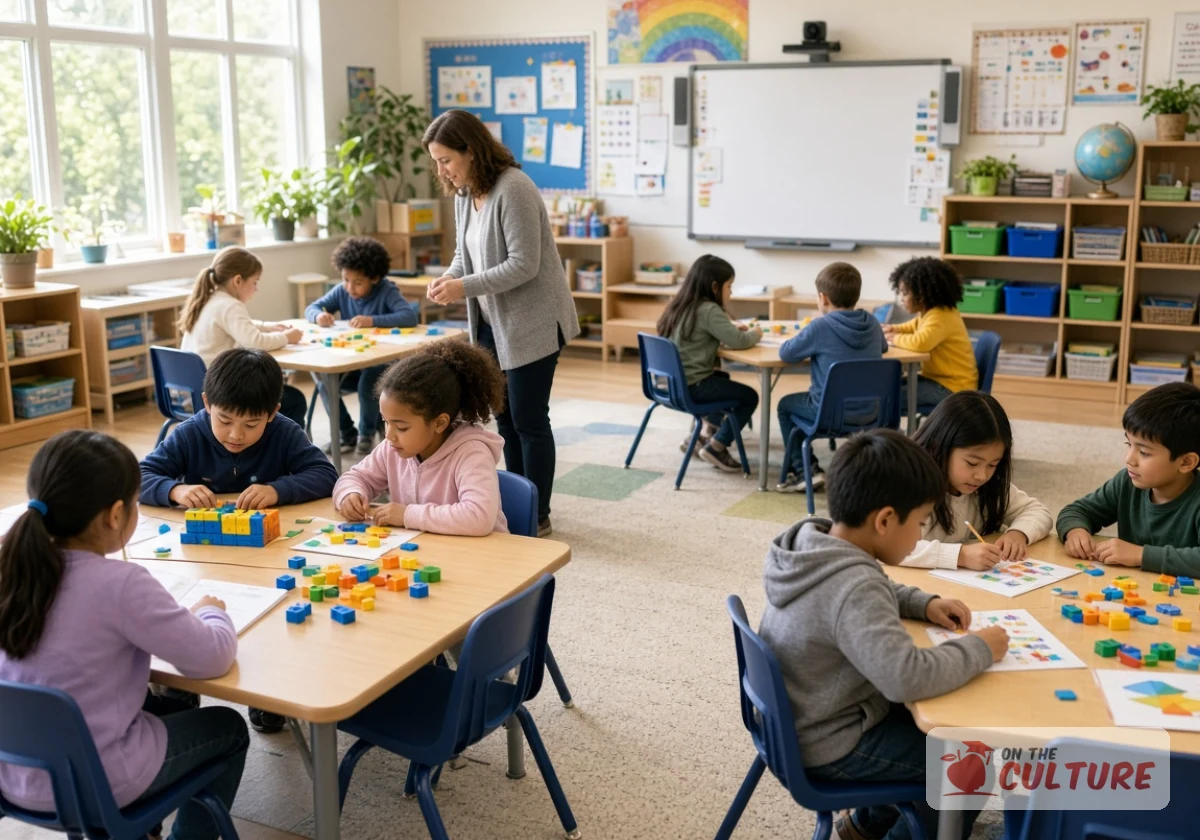
Plan extension tasks for students who finish their work early. This gives them a chance to build on what they’ve learned instead of sitting idle. Without a plan, those minutes drift toward chatter, wandering, or a second copy of the page they just finished.
That drift hits hardest mid-lesson, while you’re still helping the rest of the class. At On the Culture, we share practical classroom habits that make teaching days calmer and help students stay engaged.
To help you plan ahead, this guide explains why more worksheets backfire and which early finisher activities deserve a spot in your bin. You’ll also learn how to build a routine students can follow independently, with a quick reply chart for when someone says, “I’m done.”
Let’s get into it.
Why Do Early Finishers Need Differentiated Classroom Activities Instead of More Worksheets?

Students who finish ahead of their classmates need differentiated classroom activities because repeated worksheets teach nothing new and invite off-task behavior. A student who solves 20 fraction problems correctly has already shown mastery. Another 20 problems only teach them that finishing early means extra work.
Over time, quick workers start slowing down on purpose, because dragging out a task feels safer than getting another page. You’ve probably noticed this pattern in your own classroom.
Differentiated classroom activities address this problem by changing the kind of thinking rather than the amount of work. For example, a strong extension asks the student to apply the same skill in a new setting or spot an error in a worked example. These activities build critical thinking, let students work at their own level, and suit a wider range of learning styles.
Planned activities also help with classroom management. If you’ve ever had three kids line up at your desk mid-lesson, you know how quickly small group practice falls apart. Those interruptions become less frequent once students know exactly what to do next.
Extension Tasks for Students: Early Finisher Activities Worth the Extra Minutes
Many early finisher bins fail for one reason: the activities inside don’t challenge students after they’ve completed the lesson. As a result, a bin full of easy filler tells your strongest learners that finishing first earns a break from thinking. Instead, strong extension activities should provide meaningful practice that builds on what students have already learned.
With that in mind, the following activities offer practical ways to challenge students without repeating the lesson.
Task Cards That Push One Step Past the Lesson
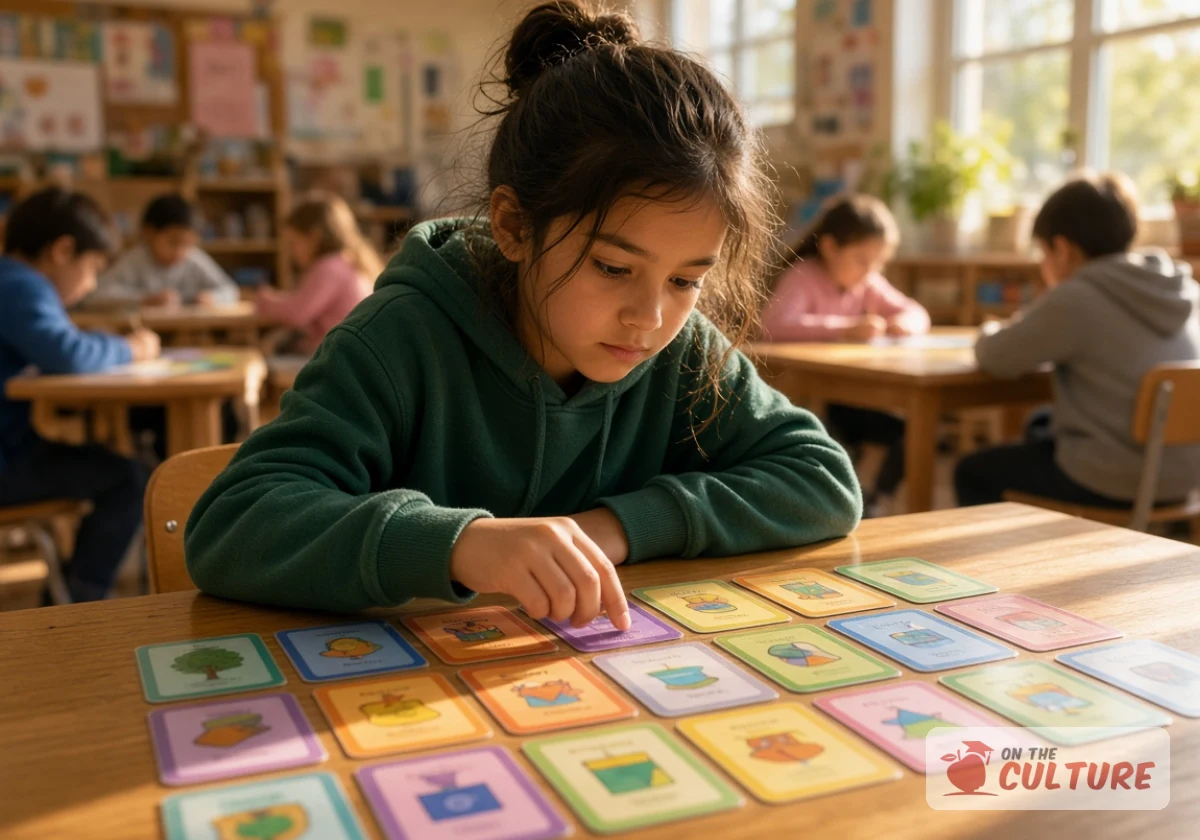
Learning cards work best when each card adds one twist to the day’s skill. For instance, after a lesson on area, a card might ask for the area of an L-shaped room.
Since each card takes only a few minutes to complete, students can work through one independently. You can also swap out the sets weekly to keep math practice tied to the current unit.
To keep things organised, label each set by unit and keep the answer key beside it. Students can then check their own work, so you only need to step in when they make errors.
Writing Prompts That Ask for an Argument, Not a Paragraph
A prompt stretches thinking when it demands a position and reasons. Something like “Should our school start an hour later?” asks for a claim, two pieces of evidence, and a counterpoint.
That structure mirrors the argument writing kids practise in upper elementary and middle school ELA. The same skills carry into science, social studies, and other literacy activities throughout the week.
For independent practice, post a short checklist beside the prompts. Writers can score their own response before handing it in (even reluctant writers seem to enjoy checking off boxes).
Math Puzzles and Logic Challenges Students Can Check Themselves
Logic grids are one task students love, because each puzzle has a clear answer. KenKen grids, magic squares, and number pattern riddles all reward persistence over speed.
Self-checking is especially useful here, since you can’t pause a lesson to grade every puzzle. An answer envelope taped inside the folder lets students check their answers without your help.
With that in mind, pick math activities with clear answers students can check themselves. Math games on laminated game boards fit the same rule when each round ends in one clear answer. Save open-ended problems for lessons where you can guide students through their reasoning.
Ongoing Choice Projects That Live in a Folder
Choice projects give early finishers something to return to across several days. One student might research an animal, while another draws a comic about a historical event or designs one of the class board games around a current unit.
Keeping each project in a labelled folder helps students pick up where they left off. It also encourages them to work independently and take pride in what they create.
For the best results, offer three or four projects tied to current units. A quick folder check every Friday can help you see how each student is progressing and where they need extra support as well.
Vocabulary Cards That Replace Coloring Sheets and Word Searches
Vocabulary cards give early finishers a chance to apply what they’ve learned. Coloring sheets and word searches serve a different purpose, with hidden-word puzzles focusing mainly on letter scanning.
Some younger kids still need practice with fine motor skills, and a coloring page can help with that. Even so, those activities fit better in a separate center than in your extension bin.
A good vocabulary card asks students to use a word in a sentence or sketch its meaning. Students still get a quiet early finisher activity that helps them apply what they’ve learned.
Building a Fast Finishers Routine That Keeps Students on Task Without You
Among fast finishers classroom strategies, a clear routine earns its keep because students stop asking you what to do next. With the bin stocked, kids need to know how to use it independently.
Many teachers post a “When I’m Done” chart on a bulletin board near the work area, listing the order of choices students follow. Teach that chart in the first week of school, then practice it twice before you rely on it during a real lesson.
Once students know the steps, they also need easy access to the materials. A bin at the front pulls traffic past working classmates, so an early finisher station on a back shelf works better. Ideally, place it beside the math centers or literacy centers you already run.
Sharing that space means one set of storage rules for the whole room. If your planning time already feels thin, our time management strategies for teachers offer practical ways to make room for classroom preparation.
With the chart taught and materials in place, five parts of the routine still need your attention:
- Posted Chart: Shows the order of choices, so no one needs to ask what comes first. A simple “Check Work → Choose a Task → Get Started” sequence gives students clear instructions. Post it at student eye level so they can refer to it without interrupting you.
- Self-Check Step: Before choosing an extension task, students review their completed work for missing answers and careless mistakes. A short checklist beside the chart gives them something to follow. Have students correct any errors before moving on.
- Labeled Bin or Folder: Keeps activities sorted by subject and skill level. Separate math, reading, and writing folders make finding the right task easier. Students should know which folder to choose without asking for help.
- Volume Rule: Sets clear expectations for noise, including which quiet brain breaks are allowed. Students need to know when whispering is acceptable and when silence is expected. Practice both situations so they understand the rule before working independently.
- Friday Review: This sets aside time each week to check folders and refresh activities. Some tasks may need replacing, while unfinished projects can stay for another week. A quick look at student progress helps you decide what to prepare next.
The self-check step deserves the most care, because it stops students from rushing through their work. Once the routine becomes familiar, students should need fewer reminders and interruptions at your desk should become less frequent.
How Should Teachers Reply When a Student Says “I’m Done”?

When a student says “I’m done,” start with a quick quality check before directing them to a specific extension task. This helps catch rushed work before it becomes a habit.
A consistent response also helps students learn what to do next without repeated instructions. The table below gives you short replies for common situations, each taking only a few seconds.
| What You See | What to Say | Why It Works |
|---|---|---|
| Rushed, messy work | “Show me your two strongest answers.” | The student rereads and fixes errors before moving on |
| Accurate, complete work | “Grab a task card from the blue bin.” | The student starts a stretch task right away |
| A finished choice project | “Add one new section to your folder.” | The student goes deeper with no extra prep from you |
| A student who wants to help peers | “Check with me first, then help one table.” | You keep peer help from turning into answer-giving |
These short replies also help students understand what you expect before they move on. With a consistent quality check, they’re less likely to rush through assignments just to reach the activity bin.
Plan for Your Early Finishers Before the First Hand Goes Up
Early finishers need extension tasks you’ve planned in advance, so their spare minutes support learning instead of becoming busywork. The bin, the routine, and the reply chart help students work independently while you focus on the rest of the class.
You don’t need to prepare every activity at once. Start this week with one subject and five activity cards that build on your current unit. Once students know the routine, add writing prompts and a choice project to give them further options.
As your early finisher routine develops, you may want to try other ways to keep students engaged. Contact On the Culture for practical teaching ideas you can use in your classroom next week.