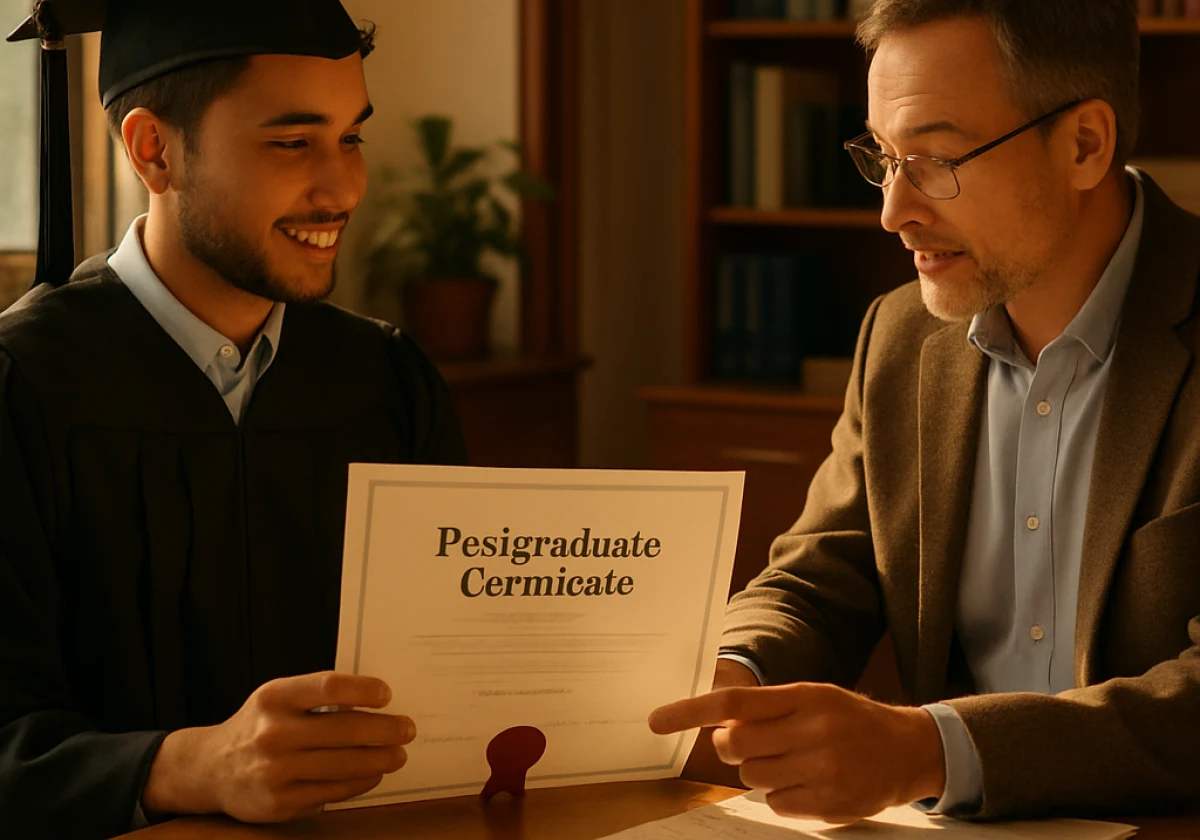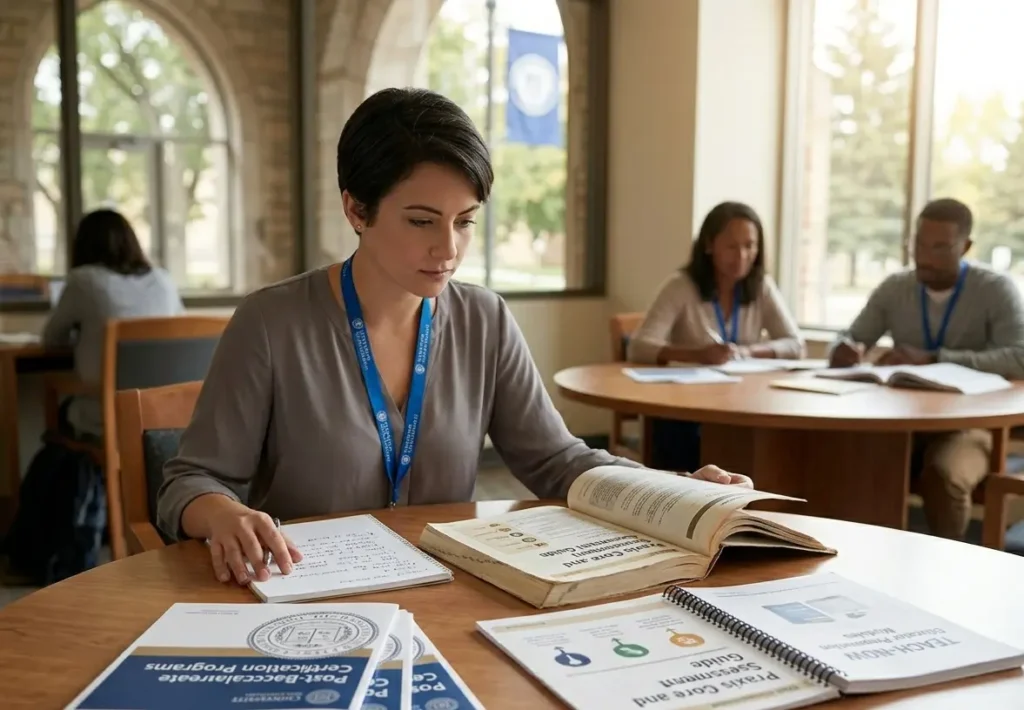
Person considering a teaching career

How to Know If Teaching Is the Right Career for You

Teaching looks straightforward from the outside. Most people picture the classroom and stop there. What they miss is everything around it, the grading, the lesson plans, the parent emails, and the staff meetings that fill up the hours before and after the bell rings.

This teaching career guide is for anyone seriously weighing that reality. At On The Culture, we’ve worked with educators at every stage of the profession, and one thing comes up consistently.

The teachers who thrive are not always the most confident ones walking in. More often, they are the ones who took the time to ask the right questions before they started. That is what this guide is here for. We will walk you through the core teacher skills, the daily realities, and the honest expectations that come with the job.

By the end, you’ll know for sure whether this path is genuinely the right one for you.

What Does a Teaching Career Actually Look Like?

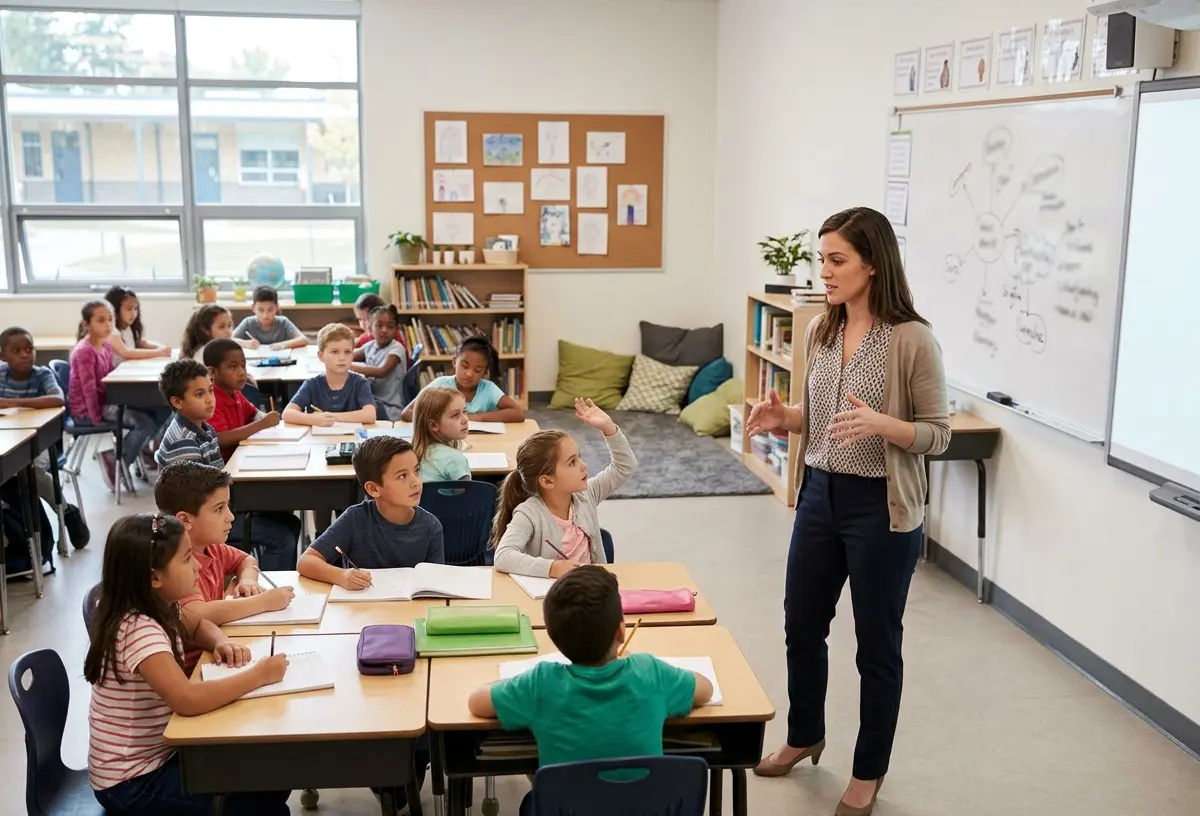
Most people picture teaching as standing in front of a classroom. What they miss is everything around it, like grading, lesson plans, parent emails, and back-to-back meetings. These are the hidden responsibilities teachers manage daily, and most outsiders never fully account for them.

Picture a regular Tuesday morning: you arrive early, find a parent email waiting before first period, then teach several classes with barely a break. And frankly, that inbox full of messages before the bell even rings is something nobody really prepares you for.

As the Bureau of Labor Statistics confirms, teachers carry a surprisingly wide range of duties outside direct instruction. That is part of what makes the teaching profession so demanding, and for most, so worth it.

Teacher Skills You’ll Want to Build Early On

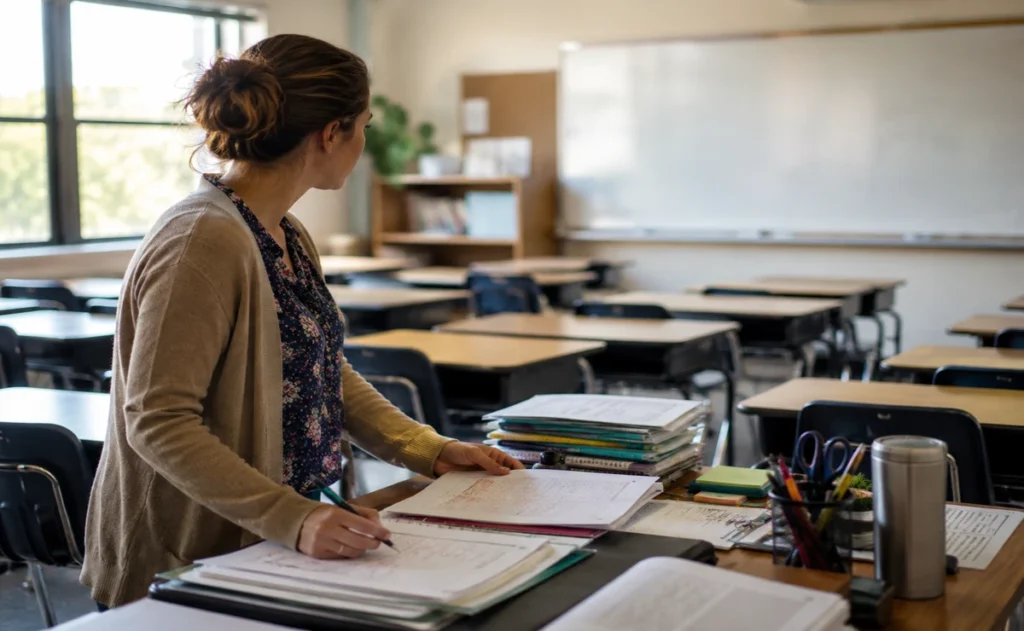
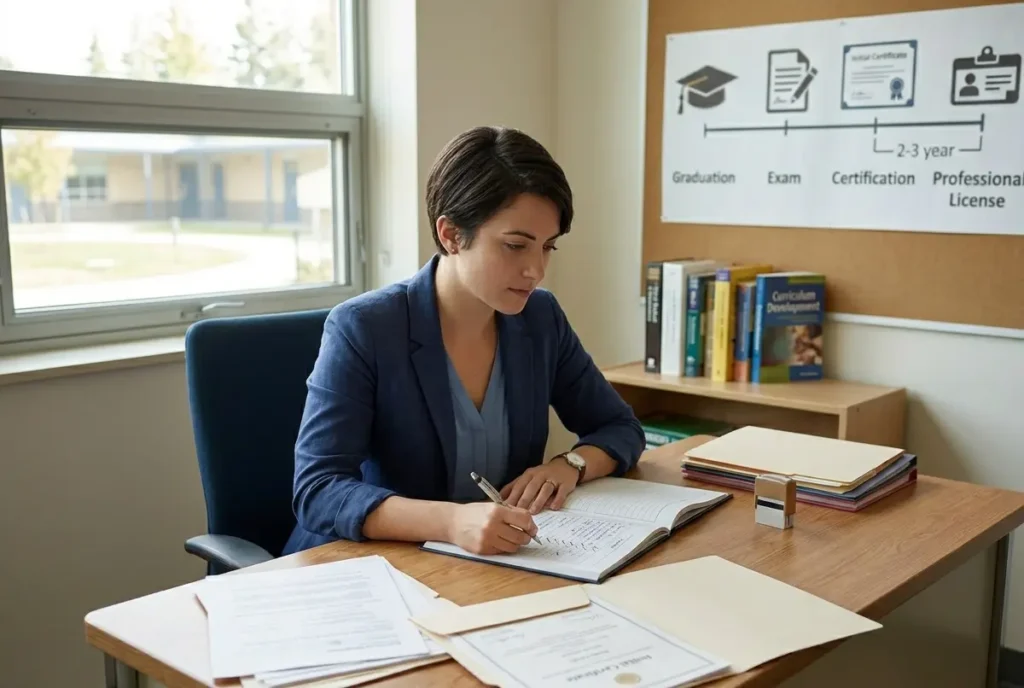
Teacher workspace with lesson materials

Most essential teacher skills can be learned and strengthened over time, which is genuinely good news if you are still figuring out where you stand.

From what we’ve seen, the teachers who hit a wall in year one weren’t struggling because they didn’t know their subject. They just weren’t ready for how demanding the day-to-day would actually be. These three skills tend to separate the teachers who find their footing quickly from the ones who don’t.

Organization and Time Management

Strong organizational skills help teachers stay on top of lesson plans, student progress, and deadlines without constantly feeling behind. That disorganization does not stay contained to the teacher’s desk either. It bleeds into the classroom, and students pick up on it faster than most new teachers expect.

Patience With Students Who Struggle

Some students need the same concept explained several different ways before it clicks, and that is completely normal. What catches many new teachers off guard is just how often that happens, because in year one, it feels like it is happening every single day.

Staying Flexible When Plans Fall Apart

Even carefully prepared lesson plans can unravel quickly. And real students in an actual classroom have a way of taking things in a direction you did not plan for. Here, learning to read the room and adjusting on the fly is something that comes with time, and honestly, it is one of those things you only truly get by doing it.

Now, let’s look at how communication fits into all of this, because it is more specific than most people assume.

Communication Skills That Make or Break Your Classroom

Ever watched a teacher lose a classroom in under five minutes? Poor communication is almost always the reason. And it is not just about how clearly you explain a lesson. It covers everything from how you write emails to how well you listen when a student is struggling.

Here are the three communication areas worth paying attention to:

  • Verbal Communication Skills: Clear instructions help students know exactly what is expected. When a teacher over-explains or uses inconsistent language, students check out before you even finish the sentence (twenty minutes on a two-minute task, and students never forget it).
  • Written Communication Skills: Keeping parents and school administrators informed builds trust on both sides. And working effectively with parents and families shapes how your classroom is perceived all year long.
  • Practice Active Listening: Students give you signals constantly. Picking up on confusion or distress early keeps the learning environment healthier for everyone.

Ultimately, good communication builds the kind of classroom where students feel valued and ready to engage.

Classroom Management: Can You Handle 30 Kids at Once?

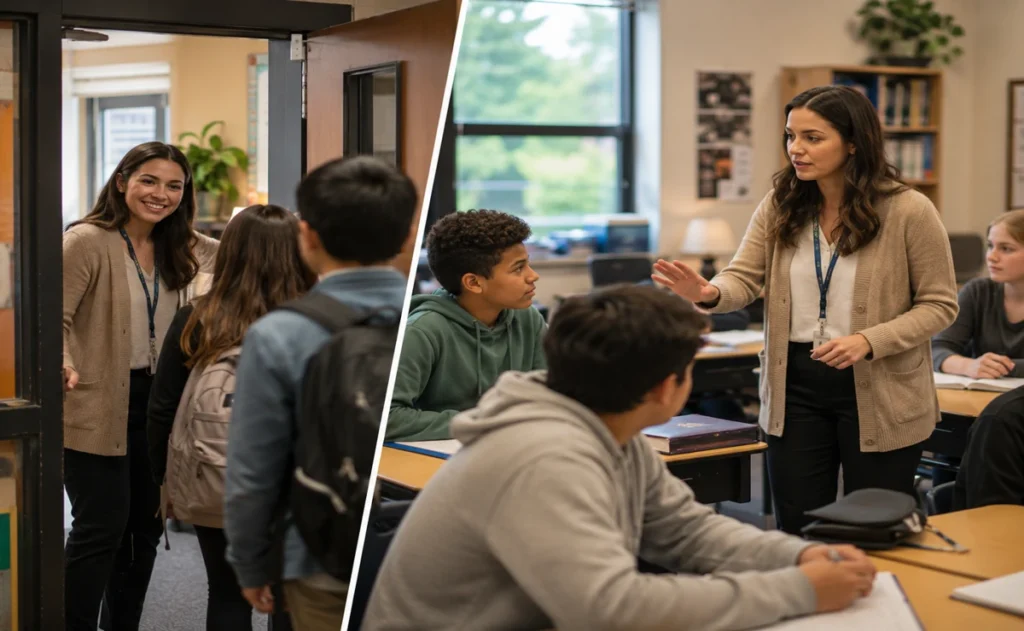
Teacher handling active classroom

Classroom management is one of the hardest challenges new teachers face, and it rarely comes naturally at first. You can read about it, take courses on it, and still feel underprepared when thirty students walk through your door on day one.

To put it plainly, here is what that difference looks like side by side.

 Factor Strong Management Weak Management
 Learning timeMaximized through clear structure Lost to constant disruptions
 Student behavior Predictable and calm Inconsistent and reactive
 Teacher energy Focused on actual teaching Drained by behavioral issues
 Classroom trust Built steadily over time Difficult to establish

Honestly, walk into a classroom where the teacher never nailed down a routine and you can feel it within two minutes. Students are off-task, the teacher is reacting instead of teaching, and everyone in that room knows something is off.

Two methods tend to work in this situation:

  • Setting Clear Routines: Rules and expectations set in the first week do a lot of the heavy lifting for the rest of the year. A classroom where students know the drill from day one runs more smoothly, and that structure creates a positive learning environment where actual teaching can happen.
  • Consistency Builds Trust: New teachers are often surprised by how closely students watch them. Enforcing expectations the same way every single time, even when it is inconvenient, is what gradually builds a positive classroom environment that students respect.

Once that is established, the conversation shifts to something teachers do not always expect to need: real leadership.

Why Leadership Skills and Critical Thinking Matter

Most people do not picture a teacher when they think of a leader. But walk into any classroom, and that assumption falls apart pretty quickly. You are guiding a room full of people, reading the energy, and making calls about the lesson in real time. That is leadership, whether the job title says so or not.

What’s more, these leadership skills do much more than just keep order. Take a math teacher mid-lesson who suddenly realizes half the class looks lost. Do you slow down, switch examples, or push through? That split-second read is something teachers navigate constantly (and when that judgment slips, students notice before you do).

Critical thinking also plays into every one of those moments. According to recent data on how teachers actually spend their time, a significant portion of a teacher’s day happens outside direct instruction.

So, adjusting your teaching methods on the fly and keeping student learning moving forward is something you rely on every single day, not just when things go sideways.

Now that we have covered leadership, it is worth talking about what happens when things get tense (and they will).

Conflict Resolution Skills Every Teacher Needs

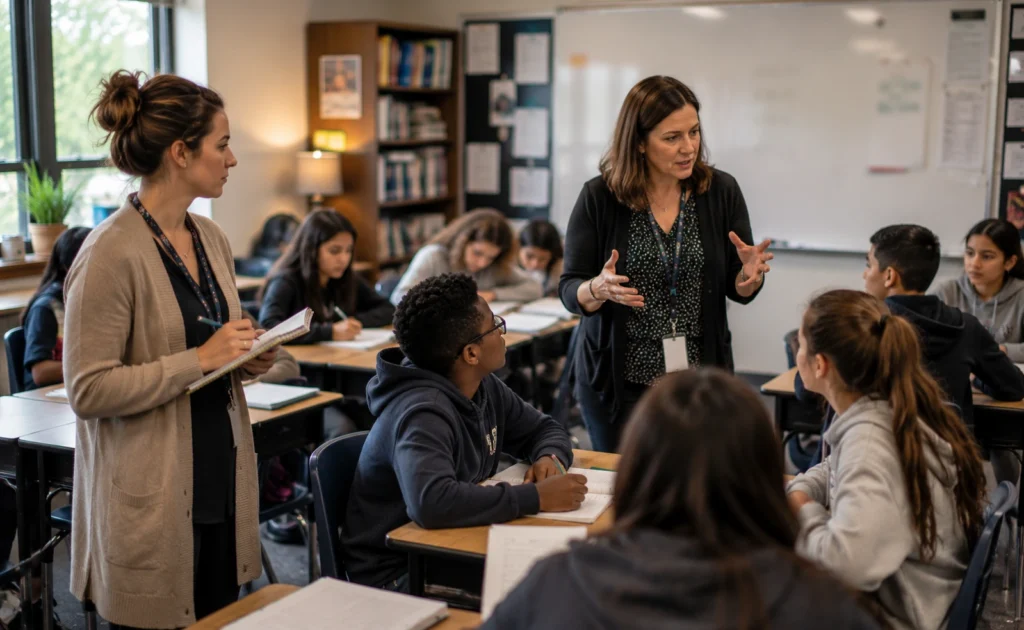
Teacher guiding conflict resolution discussion

The good news is that conflict resolution skills are something you can build deliberately, long before you actually need them.

Here is where conflict tends to show up most.

  • Student Disagreements: Mediating calmly without taking sides is what keeps the classroom setting stable. When a teacher steps in the wrong way, students stop seeing them as a neutral presence, and that loss of trust makes every future disagreement harder to manage.
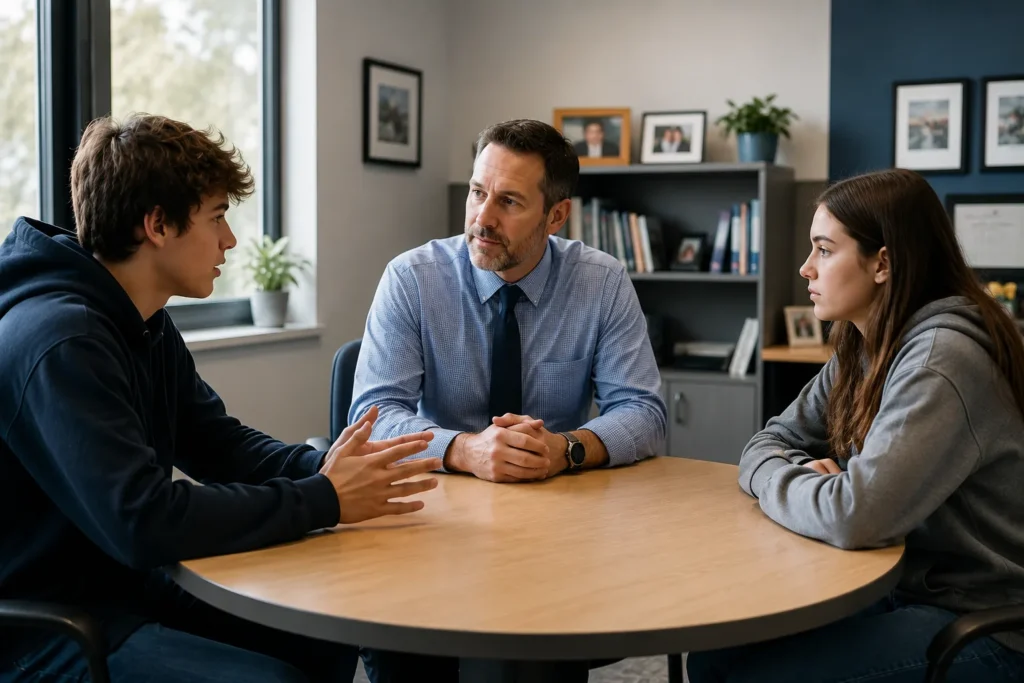
  • Parent-teacher Conflict: At some point, you will sit across from a parent who is absolutely convinced their child can do no wrong. There is no way around this, and the teachers who handle it best are the ones who keep their tone even and steer the conversation back to student progress rather than personalities.
  • Unresolved Tension: When conflict gets ignored, the whole class feels it. Engagement drops, focus shifts, and before long, the learning environment starts working against you (ignore it once, and students will test that boundary again; they always do).

Strong conflict resolution skills help build a supportive environment where students feel safe enough to actually focus on learning.

Is the Teaching Profession the Right Fit for You?

If you have made it this far, you probably already have a sense of whether teaching feels right for you. And to be honest, the fact that you are asking these questions puts you ahead of most people who just jump in.

The best teachers are not always the ones who felt certain at the start. What carried them through was a genuine interest in people and enough resilience to push through the days that do not go to plan.

Ready to take the next step? Explore more teaching career guidance and real classroom insights at On The Culture.

Small Teaching Tweaks

Small Teaching Tweaks That Make a Big Difference in Student Focus

Student focus isn’t about overhauling your lesson plans. Most teachers don’t have time for that anyway.

The truth is, small adjustments make the biggest difference. A two-minute routine here, a silent hand signal there, and suddenly you’re teaching engaged students instead of wandering minds.

I’m Bill Jason, and I’ve spent over 20 years as a teacher figuring out what actually works.

These six teaching strategies require no special training and work tomorrow. They’re tweaks that stick because they’re simple:

  • Two-minute paper routines that settle chaotic energy
  • The 10-2 rule for resetting attention spans
  • Visual timers that make time concrete
  • 30-second brain dumps before hard concepts
  • Silent hand signals that reclaim attention
  • Breaking big tasks into three chunks

Let’s start with the easiest one.

Start Every Class With Two Minutes of Paper Time

You know that chaotic energy when students first walk in? Backpacks dropping, conversations finishing, minds still in the hallway. Instead of fighting it, channel it. Give them two minutes to write anything on paper: yesterday’s lesson summary, burning questions, or even doodles that connect to your subject.

Moving a pen across paper does something typing can’t. A 2024 study from the Norwegian University of Science and Technology found that handwriting creates widespread neural connectivity, stimulating more of the brain and priming students to absorb new information.

Start Every Class With Two Minutes of Paper Time

Try this strategy tomorrow. Hand out paper as they walk in, set a timer, and watch how it helps settle the room

Use the 10-2 Rule to Reset Attention Spans

Even your most focused students hit a wall after about 10 minutes of listening. They’re not trying to be rude (maybe some are in their rebellious phase). Their brains just need a reset.

Here’s what to do: After every 10 minutes of instruction, give students 2 minutes to process. They can turn and talk with a partner, jot down three key points, sketch the concept, or even do ten jumping jacks if energy is low. Then you return to teaching.

As Dr John Medina, a leading expert in brain development and cognition, says in his best-selling book Brain Rules, “The brain needs a break to process information effectively. Attention drops dramatically after about 10 minutes of passive listening.”

Set a timer on your phone and follow the 10-2 rhythm. Students retain more, zone out less, and even the afternoon slump feels more manageable.

Make Time Visible With Visual Countdown Timers

Saying “you have 15 minutes” doesn’t mean much to students who can’t see time passing. Visual timers turn an abstract concept into something students can actually see.

Use either a physical Time Timer with a red disappearing disk or project a browser-based countdown on your board. Students glance up and instantly know how much time remains. Give verbal warnings at the two-minute and 30-second marks, but let the visual do most of the work.

Students pace themselves better during independent work. They buckle down as the red section shrinks instead of panicking at the last minute. It’s a small tool with outsized impact.

Start Hard Concepts With a 30-Second Brain Dump

A few years ago, one of my students told me she always felt lost whenever I introduced a new concept. Her brain needed a minute to catch up, but by then I’d already moved ahead.

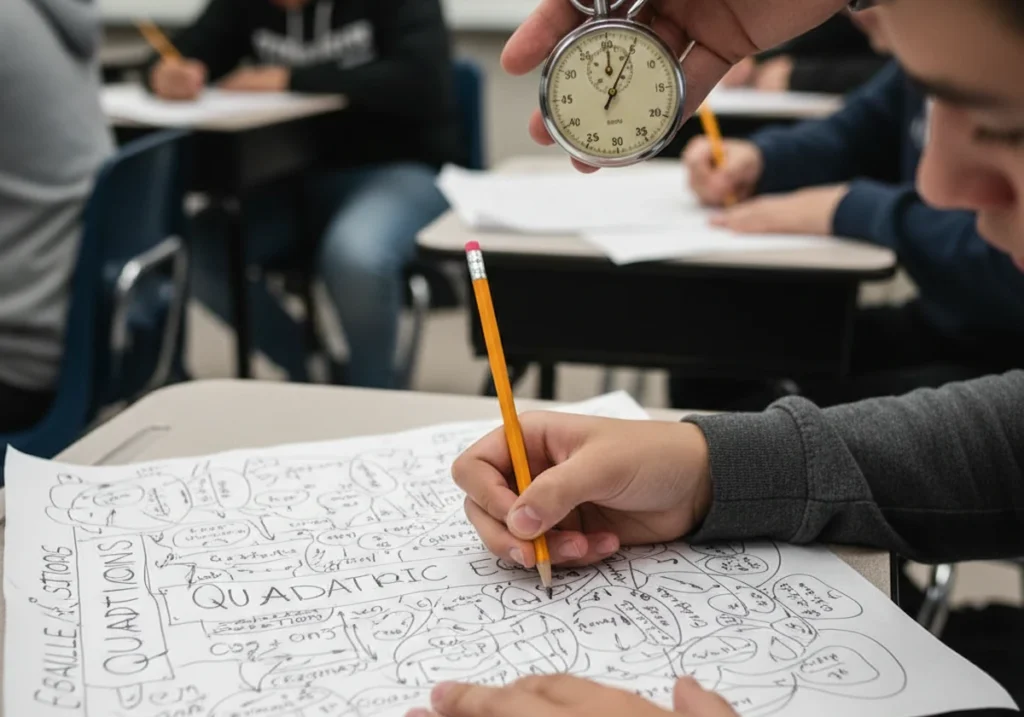
That’s when I started 30-second brain dumps. Before a tricky topic, like solving quadratic equations or analysing symbolism in poetry, I give students 30 seconds to jot down everything they already know. Anything goes. Misspellings don’t matter. Half-formed thoughts are fine.

Start Hard Concepts With a 30-Second Brain Dump

At first, the change wasn’t dramatic. But over time, students started asking sharper questions and making connections faster. They stopped staring blankly and jumped in right away.

It works because students activate what they already know before you add new information. They build on existing knowledge instead of starting from scratch.

Start tomorrow: give students 30 seconds to brain dump before the hard stuff and watch how much faster they engage.

Use the “Hands-Up, Hands-Down” Signal for Attention

You’ve been there. Mid-lesson, the room gets loud during partner work, and you need everyone back. Raising your voice feels exhausting, and saying “quiet down” three times never works.

Instead, raise your hand silently and wait. Students see it, mirror the gesture, and go quiet. No yelling. No repeating yourself.

The Responsive Classroom approach, used in thousands of schools, teaches this technique because visual cues paired with physical action work better than verbal commands. Students can’t talk while holding their hands up, and the silence spreads naturally across the room.

Practice it once at the start of class so students know what it means. Then use it consistently. Within a week, you should be able to reclaim attention in under 10 seconds instead of losing two minutes to “guys, listen up” cycles.

Give it a try tomorrow during your noisiest transition.

Break Big Tasks Into Three Manageable Chunks

Hand a student a five-paragraph essay, and their expression freezes. The task feels massive. They don’t know where to start, so they stare at the blank page and lose focus before they’ve written a word.

Break Big Tasks Into Three Manageable Chunks

The fix is simple. Break big tasks into three clear chunks like this:

  1. Brainstorm and outline
  2. Write the body paragraphs
  3. Draft the introduction and conclusion, then edit

Each chunk feels achievable, so students stay focused and actually finish more work. They build momentum instead of shutting down. Next time you assign something big, try this approach. You’ll likely notice better focus and more consistent progress.

Small Tweaks, Real Impact

I’ve used every one of these strategies for years. They’ve worked in my classroom, and they’ll work in yours.

You don’t have to master them all at once. Start with one tomorrow, see how it goes, then add another when you’re ready.

Results don’t happen in a day, but small changes add up fast.

I share more teaching strategies like these on On The Culture. Check it out if you found these tips helpful.

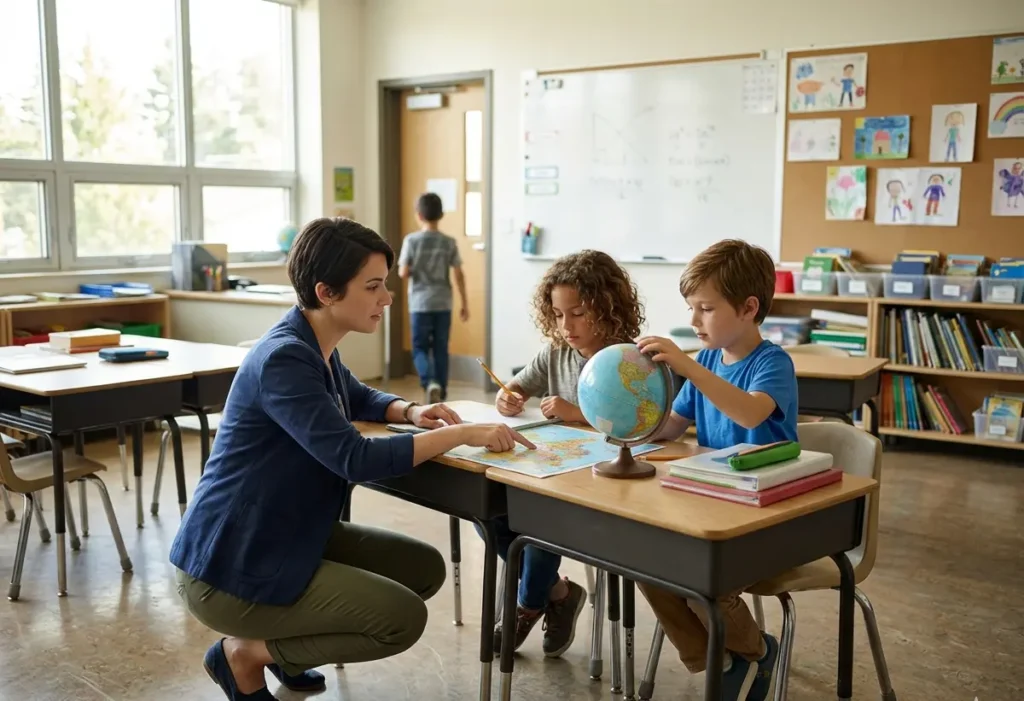
Teacher applying Teacher skills during playtime

Why Patience Is the Skill New Teachers Struggle With Most

Patience is the teaching skill that controls how you respond when lesson plans fall apart unexpectedly. When students ask the same question five times or classrooms descend into chaos, patience determines outcomes. You’ve probably heard experienced teachers talk about staying calm but rarely explain how they built that capacity.

The truth is simple: without patience, even perfect lesson plans fail because frustrated teachers can’t adapt effectively. Managing 25 students with different needs at once requires composure that doesn’t come naturally to most people starting their teaching career.

Today, we’ll cover why new teachers struggle with patience and how to strengthen it on purpose. You’ll also learn specific techniques based on classroom management research and professional development strategies. Let’s start with why patience gets tested right away.

Teaching Skills Start Here: Why Patience Gets Tested First

Patience fails early because new teachers face 30 competing demands every hour without experience in prioritizing responses. Classroom management becomes the hardest teaching skill when you’re juggling different teaching methods while students struggle at various speeds.

It’s time to understand why this challenge hits so fast.

Classroom Management Demands Split-Second Choices

Teachers make 1,500 decisions daily while managing different learning speeds and behavior levels at once. So, when one disruptive student derails lesson plans, you’re forced into instant adjustments without showing frustration.

The learning process takes many forms, meaning what works for the entire class rarely works for everyone. New educators lack experience in reading classroom dynamics, so small issues escalate before intervention happens.

That’s why your teaching style gets tested the moment students don’t understand instructions the first time. What’s more, unexpected challenges appear constantly: students struggle with concepts that seemed simple during planning.

Student Performance Doesn’t Follow Your Timeline

Now let’s look at the timeline issue that frustrates most teachers. Clear instructions don’t guarantee immediate understanding. It’s because students process information at vastly different rates. However, repeating concepts five times feels inefficient, but it matches how actual learning works in classrooms.

After years of working with new teachers, we’ve seen this pattern repeat constantly. Expecting quick progress creates frustration when reality shows slower growth than the lesson plans anticipated.

Yes, students indeed need time to process teaching methods that feel obvious to educators. When you rush this natural learning process, impatience builds faster than student understanding ever could.

What Happens When New Teachers Lose Patience Too Fast?

Teacher's stress confusing the students

Visible frustration damages student trust, making them less willing to ask questions or admit confusion. Students pick up on teacher stress faster than most educators realize, so they start shutting down instead of engaging. Here’s the thing: one sharp comment can shift an entire classroom’s energy for the rest of the period.

Sharp responses create tense classroom atmospheres where students disengage rather than risk embarrassing interactions (we’ve all been there). What happens next is predictable: student engagement drops because the learning environment feels unsafe. Teachers who snap at struggling students often see behavior problems multiply instead of improve.

That’s why early impatience patterns become habits that hurt professional reputation and make teaching feel exhausting. The classroom becomes a place where students avoid participation, and teachers wonder why their lessons fall flat. However, recognizing this cycle early gives you the chance to break it before it defines your teaching career.

Building Relationships vs. Losing Respect: The Balance

The best part about patient classroom management is that students actually cooperate more when they trust your consistency. Building relationships takes time, but losing respect happens in seconds. That’s why we need to understand how patience protects both connection and authority.

Clear Expectations Need Consistent Follow-Through

Let’s look at why consistency is more important than strictness. Setting rules means nothing without patient enforcement since students test boundaries to understand real limits. This is where most people go wrong: inconsistent responses confuse students about actual expectations, creating more behavior problems than they prevent.

So following through calmly every time builds credibility while angry enforcement damages positive relationships without improving behavior. When push comes to shove, students respect teachers who remain calm and stick to what they said. Effective classroom management relies on predictable responses, not emotional reactions.

Beyond that, confident teachers understand that clear expectations paired with consistent routines create a supportive environment where students develop trust. That’s how you build positive relationships without crossing into friendship territory that makes students lose respect for your authority.

Active Listening Prevents Most Patience Problems

Now let’s talk about the listening skills teachers overlook. Hearing student explanations before reacting reveals misunderstandings that look like defiance or disrespect at first (this happens more often than you’d think). So when you jump to conclusions, you waste time correcting problems that didn’t exist or missing actual issues entirely.

Two minutes of active listening prevents ten minutes of frustration from addressing the wrong problems repeatedly. Students feel heard when teachers make eye contact and actually understand students’ perspectives before responding. That simple shift creates a positive learning environment where the classroom community thrives.

On top of that, active listening strengthens emotional learning and self-skills for both teachers and students. When you take time to understand diverse perspectives and different perspectives in your classroom, students are more willing to engage honestly instead of shutting down.

Professional Growth Through Self-Evaluation

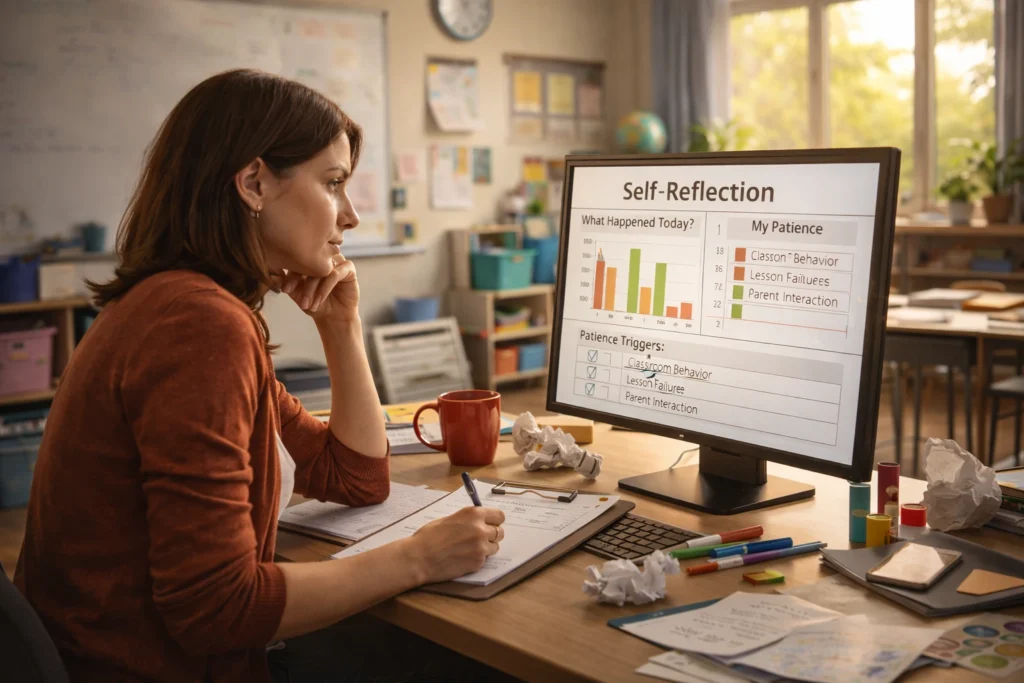
Teacher tracking her patience triggers

Research shows teachers who track their patience triggers report fewer frustrating interactions within weeks of starting. So why does this work? Well, self-evaluation becomes the most powerful tool for professional growth because it shows exactly when and why patience breaks down.

In our experience with hundreds of first-year educators, those who practice self-reflection improve faster than teachers who just hope things get better. A teaching journal helps you identify trends in student performance data that reveal whether impatience stems from unrealistic expectations or preventable planning gaps.

For example, if math scores drop during afternoon lessons, maybe students need movement breaks rather than harder consequences. Self-evaluation can make you a better teacher by helping you bite the bullet and honestly assess personal stress management.

That means separating teaching challenges from outside life pressures affecting classroom responses. Fellow educators and school leaders in the education industry emphasize this: identifying areas where your teaching practice needs adjustment prevents burnout before it starts.

Practical Ways to Strengthen Patience During the School Year

Now that you understand why patience breaks down, these methods work in actual classrooms during the school year. Teachers who apply even one of these techniques see improvement within weeks.

Let’s look at what strengthens patience most effectively.

  • Differentiated instruction: Matching tasks to current abilities prevents frustration from forcing uniform expectations on students with different learning styles. Students learn at various speeds, so creating lesson plans with multiple entry points reduces the impatience that comes from constant reteaching. That’s why teachers using differentiated instruction see better outcomes because students engage at their actual grade level instead of pretending to keep up.
  • Engaging lessons: Building lessons with real-world examples and collaborative projects keeps students focused, reducing off-task behaviors that test patience the most. Effective teaching habits include tech integration and hands-on learning experience options that improve student outcomes naturally. Now here’s where it gets tricky: when students see why content matters beyond tests, student engagement rises and classroom disruptions drop on their own.
  • Three-second pauses: Taking quick pauses before responding to disruptions prevents reactive comments that escalate minor situations into major problems. This simple teaching practice gives you time to assess whether a student legitimately needs help or just wants attention. The thing here is that teachers who pause first engage students more effectively because responses feel measured rather than emotional, improving the entire learning environment.
  • Backup activities: Creating enrichment teaching materials for fast finishers stops boredom behaviors before they start testing classroom limits (annoying, but necessary). Students who complete work early often distract others or lose focus entirely during the school year. What’s more, having meaningful feedback-ready extension activities keeps the classroom productive and reduces patience-testing moments throughout daily instructional strategies.

Pro tip: Start with just the three-second pause technique this week. What we can assure is that once pausing becomes automatic, add one differentiated instruction element to your existing lesson plans for immediate results.

From Surviving to Thriving: The Growth Mindset Shift

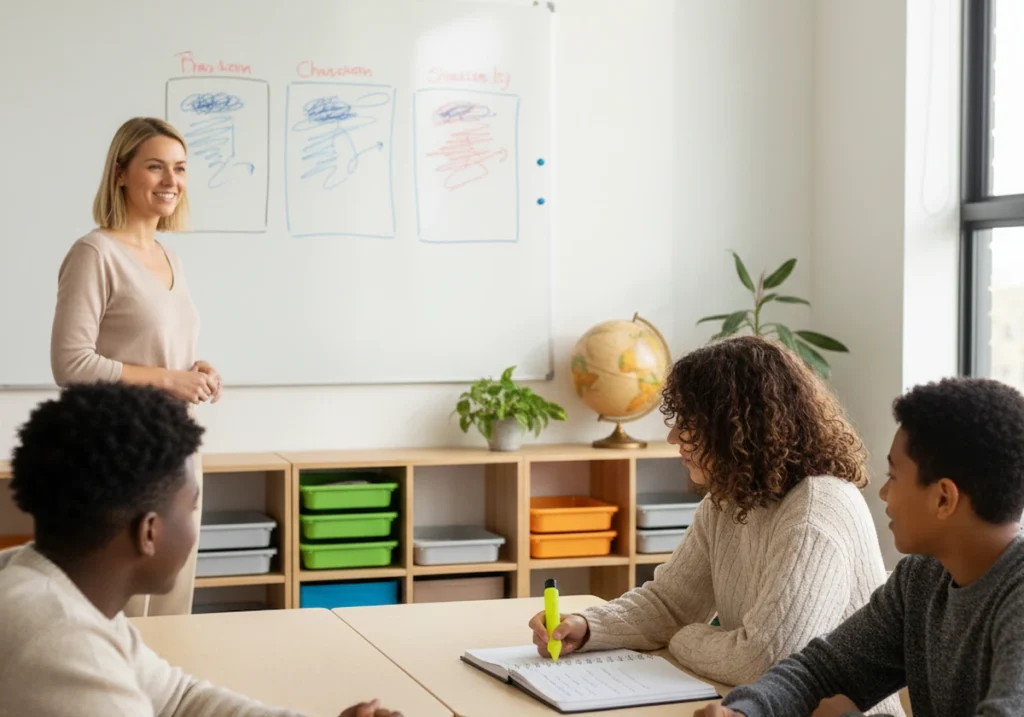
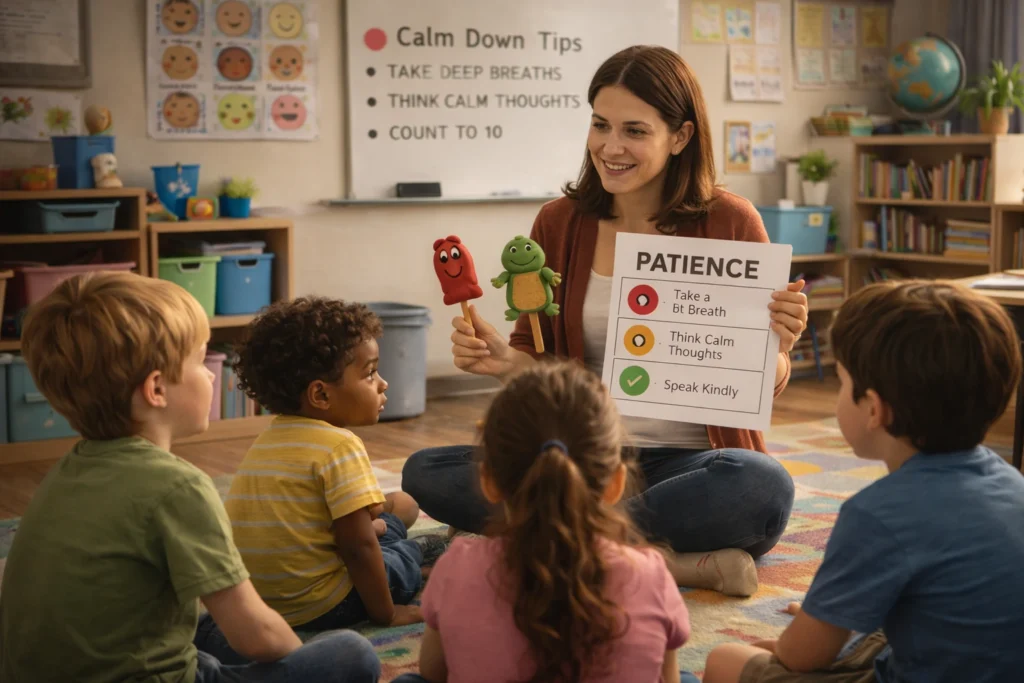
Teacher teaching kids how to deal with impatience

Patience becomes easier once you stop viewing impatience as a character flaw and start treating it like any other teachable skill. Think about it this way: a growth mindset changes how teachers approach patience struggles entirely. Viewing patience as learnable improves the feeling of possibility instead of hopelessness.

Teachers who adopt a growth mindset about their professional growth handle classroom challenges differently. Students thrive in learning environments where teachers model growth mindset thinking by admitting struggles and working through them openly. That’s why recognizing first-year struggles as normal reduces shame around having patience problems initially.

Each difficult interaction becomes practice when a growth mindset guides perspective. This shift creates a shared purpose between teachers and students: everyone’s learning together, and that’s an essential part of maintaining a healthy work-life balance in this demanding profession.

Your Next Step in Professional Development

Patience grows through intentional practice, not magical personality changes or waiting for easier students. Teachers who strengthen this teaching skill see improvements in both classroom management and student outcomes within weeks. At the end of the day, professional development in patience directly impacts your teaching career success more than any curriculum choice.

Starting with one small adjustment, like pausing before responding, creates measurable improvement fast. Self-evaluation shows which techniques work best for your specific classroom challenges. These teaching skills compound over time, leading to better student outcomes and academic success for everyone.

On the Culture is here to help you with practical strategies built for real classrooms. Keep an eye on our website to get more insights on developing the teaching skills that are actually necessary for your professional development journey.