
first year teacher challenges

What New Teachers Struggle With in Their First Year

Most new teachers walk into their first classroom full of energy, ideas, and a desire to connect with their students. However, the first year of teaching has a way of testing that enthusiasm in ways that no education program fully prepares you for.

Student teaching gives you a preview, but standing alone in front of a class is a different experience entirely. New teachers must also juggle planning, administration, communication, and other daily responsibilities.

This guide is for first-year teachers who want an honest look at what is coming. The goal is to make sure you walk in with your eyes open, so the hard parts don’t catch you completely unprepared.

First-Year Teacher Challenges Nobody Warns You About

First-Year of Teaching Challenges

Most education programs teach you how to write a lesson plan. But very few prepare you for what happens when everything else falls apart.

In fact, research on new educators has found that many leave the profession within their first three years. Time management, emotional demands, and high expectations overwhelm many of them within the first few months.

Here’s what it looks like on the go.

When the Lesson Plan Falls Apart

Learning how to recover mid-lesson is one of the most valuable skills a first-year teacher can develop.

Even well-prepared lesson plans can collapse. Students disengage, misunderstand the material, or take a discussion somewhere unexpected. Suddenly, the plan you spent two hours building stops working.

Most new teachers panic in that moment. But experienced teachers treat it as a normal part of the job. Those who handle it well pause, read the room, and adjust instead of forcing the plan through.

The Paperwork Nobody Prepared You For

No one hands you a manual for administrative work on your first day, yet those responsibilities quickly become part of the job. Building teacher readiness early can make these daily tasks far more manageable.

Grading papers, taking attendance, managing Individualized Education Programs (IEPs), and keeping up with parent communication can be hard to manage. A single school day often creates more follow-up work than you can realistically complete. Most teacher prep programs spend little time on this, and many first-year teachers hit week three wondering where their evenings went.

Building a simple system early helps in this case. For instance, a basic folder structure, a consistent weekly time to grade papers, and a running log of parent phone numbers go a long way. Colleagues who have been around a few years are often your best resource here, so ask them how they stay on top of it.

Classroom Management Tips That Hold Up
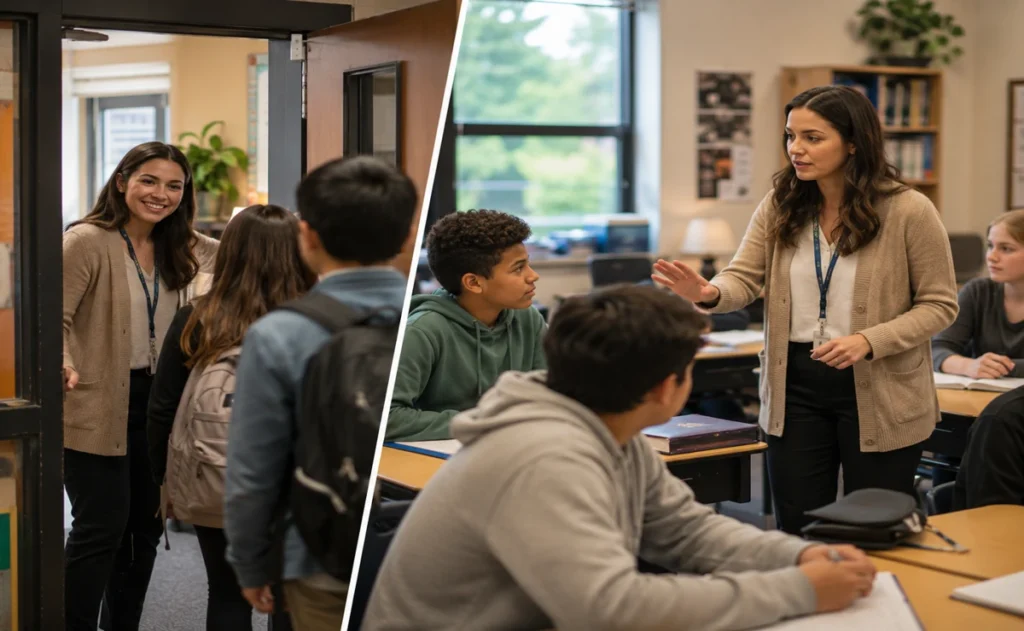
Classroom Management Tips

Strong classroom management comes down to consistency, clear boundaries, and daily habits students can count on. It sounds simple, but getting it right in the first year is a different story entirely.

Research on teacher preparedness found that only 28% of novice teachers felt well prepared for classroom management. It is one of the most common challenges faced during the first year of teaching.

Weak classroom management is the number one reason new teachers leave the job early. Students pick up on whether a teacher follows through, and once they sense flexibility, disruptive behavior spreads quickly through the class.

A few small acts can help to change things around. For instance, greeting students at the door sets a positive tone before the lesson begins. Addressing disruptive behavior calmly and immediately, rather than allowing it to build, also helps maintain focus in the classroom.

Over time, new teachers discover that relationships are at the heart of effective learning. Kids are far less likely to act out when they feel seen by their teacher. Learning names fast, noticing when a student seems off, and following up on student work all send the right message to your classroom.

How New Teachers Can Set Clear Expectations Early

Setting clear expectations in the first week saves hours of redirecting behavior for the rest of the school year. Most new teachers underestimate just how much that first week sets the tone for everything that follows.

In the opening weeks, students naturally test boundaries as they figure out who you are and what limits exist. Clear expectations from day one give them a structure to work within and reduce behavioral issues as the term progresses.

Posting classroom norms visibly on the wall helps reinforce those expectations every day. When a student pushes back, you can refer to the agreed-upon rules instead of turning it into a confrontation. This also encourages students to take responsibility for their behaviour.

Quick Tip: Set clear expectations early, revisit them often, and follow through every time.

High School vs. Earlier Grades: New Challenges, Different Game

The grade level you teach forms almost everything about your daily experience as a first-year teacher. Believe it or not, high school and elementary school are entirely different worlds.

Let’s have a quick breakdown of what changes across grade levels:


High School

Elementary

Main Challenge

Resistance and apathy

Short attention spans

Student Needs

Independence, relevance

Emotional support, structure

Classroom Teaching

Content-driven lessons

Relationship-driven learning

Discipline Style

Logical consequences

Consistent redirection

Teacher Focus

Subject mastery

Patience and nurturing

In most cases, engagement among older students is rarely automatic. Teachers often need to combine subject expertise with strong communication and classroom presence to secure acceptance. They respond to teachers who treat them like adults and connect the material to something in their lives.

On the other hand, elementary students need more emotional support and a steadier, warmer presence throughout the school day. Other students in the room pick up on the energy quickly, so classroom tone matters at every moment.

What Gets Better After the First Day (And What Doesn’t)

Some of the issues improve quickly after the first day, while others stick around longer. As familiarity grows, those early nerves usually begin to fade. By the end of the first week, the anxiety of walking into a room full of students fades into something more manageable.

Building relationships with students also comes naturally over time. Trust builds gradually, and by mid-year, most teachers feel a connection with their class.

And honestly, mistakes are part of the process. Every first-year teacher makes them, and reflecting honestly on what went wrong is how growth happens in this course of a school year.

At the same time, the workload does not disappear. Grading papers, preparing lessons, and keeping up with parents stay heavy for months. Most new teachers hope the volume eases up after the first day, but it follows you well into the year.

New Teacher Tips From the People Who Survived Year One
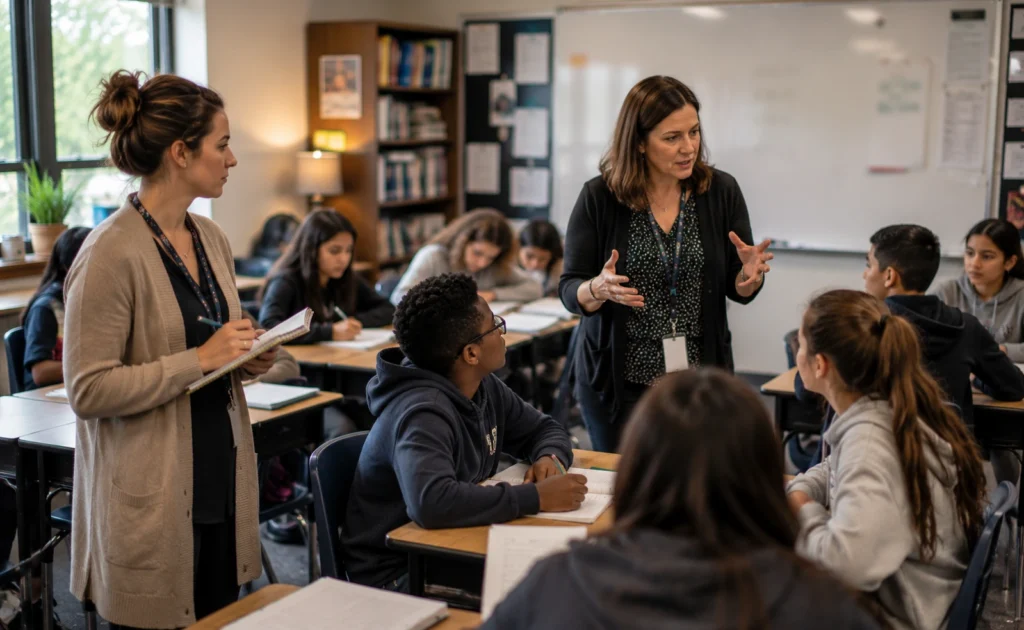
New Teacher Tips From the People Who Survived Year One

The advice that truly helps comes from teachers who have already lived through the same first year you are in now. Formal training, a graduate degree, has its place, but some of the most valuable lessons come from other teachers who figured it out the hard way.

Even veteran teachers consistently say asking for help early is the single best decision a first-year teacher can make. Observing colleagues in action teaches more than most professional development sessions will.

Step by step, small achievements build confidence, and recognising progress helps you stay grounded through the hardest parts of the school year.

Follow these daily habits that make year one more sustainable:

Building Routines Without Burning Out

Work-life balance is not something most new teachers think about at the start of the year. Planning your schedule early helps manage it, because the school day does not end when students leave.

A good starting point is to spend the first week building a schedule you can stick to. Plus, decide which nights you work from home and which ones you protect for yourself. Saving even two evenings a week can help you focus and save energy in the classroom.

Asking for Help Without Feeling Like a Failure

Ask for help to close the gap between where you are and where you want to be as a teacher. Start with your mentor if you have one. Colleagues down the hall, friends who teach at other schools, and department heads are all solid sources of support.

Many new teachers stay silent out of fear of looking incompetent to colleagues. That silence makes the first year harder than it needs to be. Because most teachers remember their own first year clearly, and they are far more willing to support you.

So, without hesitating, set up regular check-ins with someone you trust and treat your school as a community.

You Made It Through Year One: Here’s What Comes Next

The first year of teaching is hard. It tests your patience, your energy, and your confidence. But each challenge you face helps you build the skills and confidence needed for a successful teaching career.

Here’s what helps most moving forward:

  • Set clear expectations early
  • Build relationships with your students
  • Protect your personal time
  • Ask for help before things get out of hand

Those four things will put you ahead of most new teachers walking in on day one.

Head over to On The Culture for more teaching career advice, classroom strategies, and honest guidance for educators at every stage. Year one is just the beginning.

teaching certification courses

Certification Courses That Help You Enter Teaching Faster

Most people assume becoming a teacher means finishing a degree and walking into a school. In reality, teaching requires more than academic knowledge, and teaching certification courses help you learn how to handle a classroom.

Here at On the Culture, we have spent years working in and around education. We know what the system looks like on the ground, and we are here to help you in the process.

This guide walks you through the credentials, programs, and certification requirements that can get you into a classroom. Let’s begin with the most common question.

What Are Teaching Certification Courses?

What Counts as an Initial Certificate?

Teaching certification courses are structured programs that prepare you to meet your state’s licensing requirements and legally enter a classroom.

Most of these programs cover core areas like child development, curriculum planning, and classroom management. They are designed to bridge the gap between your academic knowledge and what happens when you are standing in front of 25 students every day.

You can think of them as the practical side of your education degree. A good number of these courses are also available online, which works well for working adults who can’t put their lives on hold.

How to Become a Teacher: The Basic Path

Most people trying to become a teacher are surprised by how many steps sit between them and their first classroom. So, before anything else, it helps to know what the path looks like.

Do You Need a Bachelor’s Degree First?

The great part about sorting out your degree requirements early is that it saves you from enrolling in the wrong program from the start.

In most states, a bachelor’s degree is the baseline. You can’t apply for a teaching license without one. That said, your degree doesn’t always have to be in education.

If your subject area qualifies, some states will accept a degree in that field instead, as long as you complete the other certification requirements.

What Counts as an Initial Certificate?

An initial certificate is the first official credential your state issues once you complete the required coursework, exams, and background checks.

Most initial certificates are only valid for two to three years. During that window, you are expected to hit certain benchmarks, log required hours, and meet your state’s standards before you can upgrade to a full professional license.

Once you get your initial certificate, the focus shifts to provisional and professional credentials.

Provisional Certificate vs. Initial Professional Certificate: What’s the Difference?

A provisional certificate lets you teach while you are still working through your full certification requirements. Such as a Temporary Authorization Certificate (TAC) or Temporary Educator Eligibility (TEE), which keeps you eligible to work in public schools while you finish the process.

It does come with some conditions, so read before you accept a position (plenty of teachers have been caught off guard by conditions they did not see coming).

On the other hand, the Initial Professional Certificate(IPC) is the one you earn once all your state requirements are fully met and verified. Most states also require you to pass specific exams before the IPC is issued.

Once you hold it, you are a fully certified teacher with a credential that carries real weight when you apply for permanent roles.

Teaching Certification Courses Worth Looking Into

Teaching Certification Courses Worth Looking Into

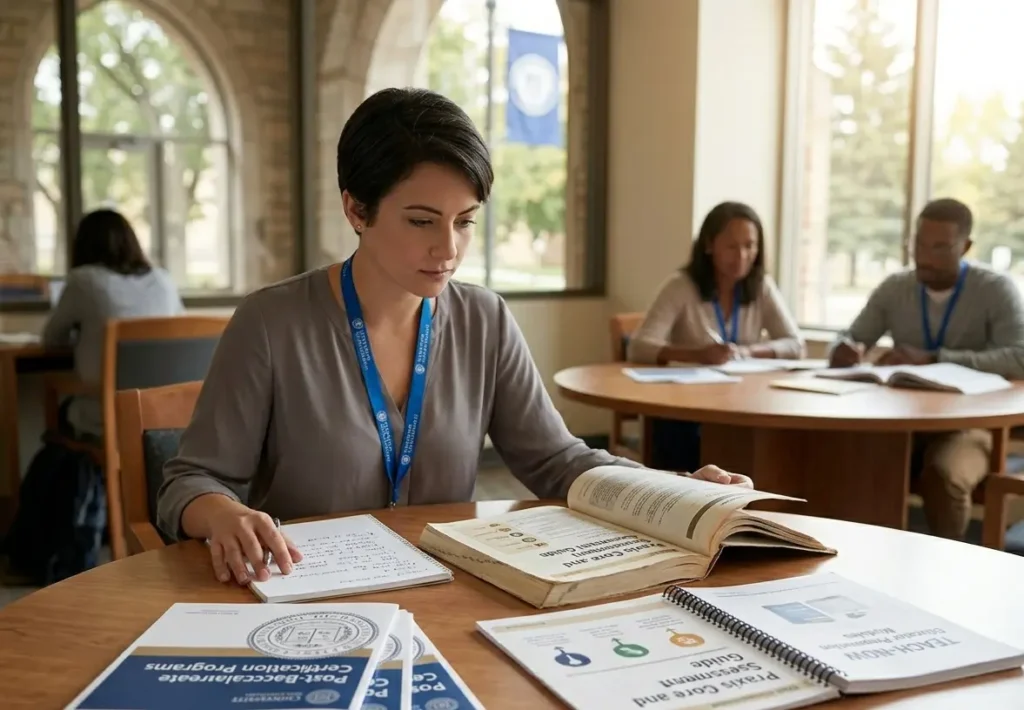
Picking the right certification program early puts you ahead of other candidates and cuts months off your path to the classroom. A few options are worth knowing about.

  • Praxis Exams: The Praxis series is one of the most widely accepted certification assessments across the US. It tests both your subject knowledge and your general teaching ability. That’s why most states require candidates to pass at least one Praxis exam before they can earn a full teaching license.
  • TEACH-NOW: This is a fully accredited online educator preparation program recognized across multiple countries. It is designed for candidates who want a flexible, career-focused certification route without sitting through years of additional classes.
  • Post-Baccalaureate Certification Programs: Several universities offer degree programs or PB certification for career development. If you already hold a bachelor’s degree in another field, this route lets you complete your teaching certification requirements without starting your education from scratch.

No single certification program fits every situation. The right one depends on your degree, your state, and the grade level you want to teach.

Elementary and Secondary Education: Which Path Is Right for You?

Elementary and Secondary Education: Which Path Is Right for You?

The path you choose between elementary and secondary education determines your certification exams, endorsements, and the age group you will spend your career with.

Elementary education covers core subjects across multiple disciplines, typically for students in grades K through 6. Teachers in this track work closely with young learners across reading, math, science, and social studies, often within the same classroom all day (which, depending on the day, can be the best and most exhausting part of the job)

On the flip side, Secondary education calls for deeper subject specialization. You will focus on one or two subject areas and teach students in grades 7 through 12. That shift in focus also changes which certification options you pursue and what your exams cover.

Choosing the right pathway early helps you align your training, exams, and classroom expectations with the kind of teacher you want to become. This makes the transition into teaching more focused and manageable, as explained in our teacher readiness guide.

State Teacher Certification: What You Should Know

Most state departments follow a fairly consistent process from application to approval. The specifics vary by state, but the core steps tend to look the same across the board.

Here’s what that typically involves.

What Do Most State Departments Require?

Most state departments require an approved educator preparation program, a content assessment, and a cleared background check before issuing any teaching license.

Beyond that, you will typically need to submit a formal application through your state’s department of education portal. Most states also require candidates to have completed a period of student teaching before they can apply (in some states, student teaching runs from 10 to 16 weeks)

How Long Does the Certification Process Usually Take?

Timelines vary, but most candidates complete the full certification process somewhere between six months and two years, depending on their starting point.

If you already hold a bachelor’s degree and just need to pass your exams and complete your educator preparation program, you could be certified within a year. However, career changers starting with fewer education credits tend to sit closer to the two-year mark.

Either way, getting your paperwork and applications moving early can shorten your overall timeline.

Quick Note: Contact your state’s department of education to confirm the current requirements and plan your next steps clearly.

Professional Development After Your Initial Certificate

Professional Development After Your Initial Certificate

Getting certified is the starting point. Most states require you to keep learning long after your first credential is issued.

Renewal typically means logging a set number of professional development hours every few years, and most states build that requirement into your license agreement. Those hours can come from graduate coursework, workshops, peer coaching, or state-approved training programs.

Staying active with your development also opens new doors. Teachers who consistently earn additional credentials often qualify for higher salaries and leadership roles inside their schools.

Some states even offer a career-continuous professional certificate for educators who meet advanced development benchmarks. If you plan on teaching long-term, that is worth looking into.

Your Next Step Starts Here

Teaching is one of the most rewarding careers you can build, and the path to getting there is clear. You now know the certification options, the credentials to earn, and the programs worth your time.

Start with these steps:

  • Confirm your state’s certification requirements through your state’s department of education website
  • Identify whether you need a provisional certificate or can apply directly for an initial professional certificate
  • Research educator preparation programs that fit your degree level, schedule, and subject area
  • Look into Praxis exams early so you can upgrade your preparation timeline before deadlines

Once you take that first step, you move closer to leading your own classroom full of students. On the Culture is here to help you make sense of every part of that journey, so feel free to visit our site for additional information on teaching careers and certification options.

Small Teaching Tweaks

Small Teaching Tweaks That Make a Big Difference in Student Focus

Student focus isn’t about overhauling your lesson plans. Most teachers don’t have time for that anyway.

The truth is, small adjustments make the biggest difference. A two-minute routine here, a silent hand signal there, and suddenly you’re teaching engaged students instead of wandering minds.

I’m Bill Jason, and I’ve spent over 20 years as a teacher figuring out what actually works.

These six teaching strategies require no special training and work tomorrow. They’re tweaks that stick because they’re simple:

  • Two-minute paper routines that settle chaotic energy
  • The 10-2 rule for resetting attention spans
  • Visual timers that make time concrete
  • 30-second brain dumps before hard concepts
  • Silent hand signals that reclaim attention
  • Breaking big tasks into three chunks

Let’s start with the easiest one.

Start Every Class With Two Minutes of Paper Time

You know that chaotic energy when students first walk in? Backpacks dropping, conversations finishing, minds still in the hallway. Instead of fighting it, channel it. Give them two minutes to write anything on paper: yesterday’s lesson summary, burning questions, or even doodles that connect to your subject.

Moving a pen across paper does something typing can’t. A 2024 study from the Norwegian University of Science and Technology found that handwriting creates widespread neural connectivity, stimulating more of the brain and priming students to absorb new information.

Start Every Class With Two Minutes of Paper Time

Try this strategy tomorrow. Hand out paper as they walk in, set a timer, and watch how it helps settle the room

Use the 10-2 Rule to Reset Attention Spans

Even your most focused students hit a wall after about 10 minutes of listening. They’re not trying to be rude (maybe some are in their rebellious phase). Their brains just need a reset.

Here’s what to do: After every 10 minutes of instruction, give students 2 minutes to process. They can turn and talk with a partner, jot down three key points, sketch the concept, or even do ten jumping jacks if energy is low. Then you return to teaching.

As Dr John Medina, a leading expert in brain development and cognition, says in his best-selling book Brain Rules, “The brain needs a break to process information effectively. Attention drops dramatically after about 10 minutes of passive listening.”

Set a timer on your phone and follow the 10-2 rhythm. Students retain more, zone out less, and even the afternoon slump feels more manageable.

Make Time Visible With Visual Countdown Timers

Saying “you have 15 minutes” doesn’t mean much to students who can’t see time passing. Visual timers turn an abstract concept into something students can actually see.

Use either a physical Time Timer with a red disappearing disk or project a browser-based countdown on your board. Students glance up and instantly know how much time remains. Give verbal warnings at the two-minute and 30-second marks, but let the visual do most of the work.

Students pace themselves better during independent work. They buckle down as the red section shrinks instead of panicking at the last minute. It’s a small tool with outsized impact.

Start Hard Concepts With a 30-Second Brain Dump

A few years ago, one of my students told me she always felt lost whenever I introduced a new concept. Her brain needed a minute to catch up, but by then I’d already moved ahead.

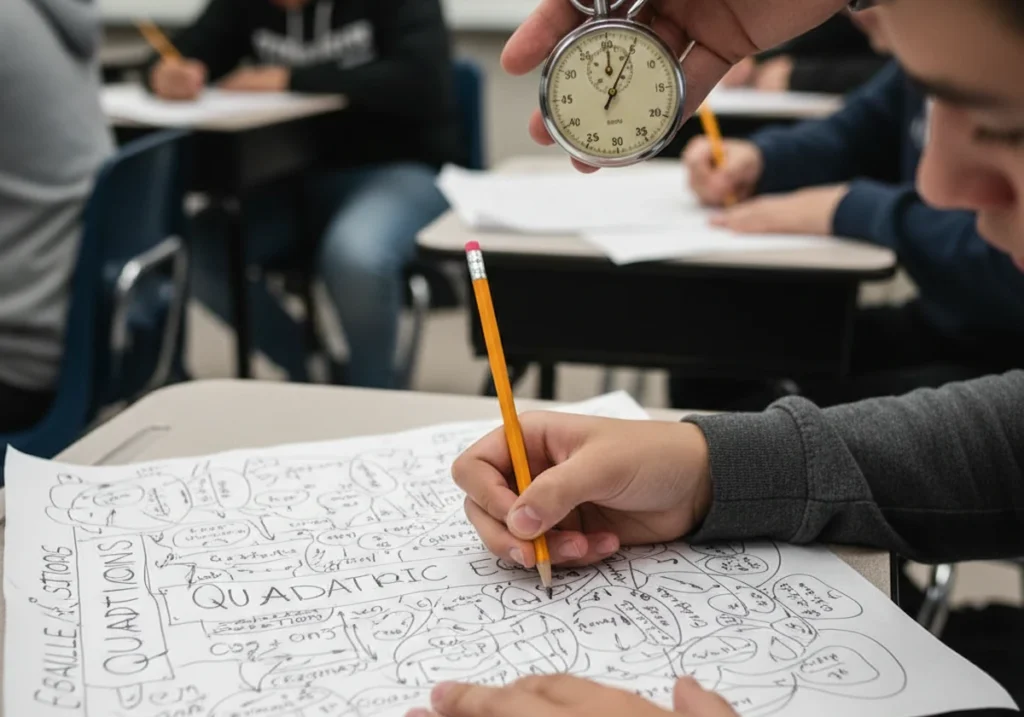
That’s when I started 30-second brain dumps. Before a tricky topic, like solving quadratic equations or analysing symbolism in poetry, I give students 30 seconds to jot down everything they already know. Anything goes. Misspellings don’t matter. Half-formed thoughts are fine.

Start Hard Concepts With a 30-Second Brain Dump

At first, the change wasn’t dramatic. But over time, students started asking sharper questions and making connections faster. They stopped staring blankly and jumped in right away.

It works because students activate what they already know before you add new information. They build on existing knowledge instead of starting from scratch.

Start tomorrow: give students 30 seconds to brain dump before the hard stuff and watch how much faster they engage.

Use the “Hands-Up, Hands-Down” Signal for Attention

You’ve been there. Mid-lesson, the room gets loud during partner work, and you need everyone back. Raising your voice feels exhausting, and saying “quiet down” three times never works.

Instead, raise your hand silently and wait. Students see it, mirror the gesture, and go quiet. No yelling. No repeating yourself.

The Responsive Classroom approach, used in thousands of schools, teaches this technique because visual cues paired with physical action work better than verbal commands. Students can’t talk while holding their hands up, and the silence spreads naturally across the room.

Practice it once at the start of class so students know what it means. Then use it consistently. Within a week, you should be able to reclaim attention in under 10 seconds instead of losing two minutes to “guys, listen up” cycles.

Give it a try tomorrow during your noisiest transition.

Break Big Tasks Into Three Manageable Chunks

Hand a student a five-paragraph essay, and their expression freezes. The task feels massive. They don’t know where to start, so they stare at the blank page and lose focus before they’ve written a word.

Break Big Tasks Into Three Manageable Chunks

The fix is simple. Break big tasks into three clear chunks like this:

  1. Brainstorm and outline
  2. Write the body paragraphs
  3. Draft the introduction and conclusion, then edit

Each chunk feels achievable, so students stay focused and actually finish more work. They build momentum instead of shutting down. Next time you assign something big, try this approach. You’ll likely notice better focus and more consistent progress.

Small Tweaks, Real Impact

I’ve used every one of these strategies for years. They’ve worked in my classroom, and they’ll work in yours.

You don’t have to master them all at once. Start with one tomorrow, see how it goes, then add another when you’re ready.

Results don’t happen in a day, but small changes add up fast.

I share more teaching strategies like these on On The Culture. Check it out if you found these tips helpful.

Teacher applying Teacher skills during playtime

Why Patience Is the Skill New Teachers Struggle With Most

Patience is the teaching skill that controls how you respond when lesson plans fall apart unexpectedly. When students ask the same question five times or classrooms descend into chaos, patience determines outcomes. You’ve probably heard experienced teachers talk about staying calm but rarely explain how they built that capacity.

The truth is simple: without patience, even perfect lesson plans fail because frustrated teachers can’t adapt effectively. Managing 25 students with different needs at once requires composure that doesn’t come naturally to most people starting their teaching career.

Today, we’ll cover why new teachers struggle with patience and how to strengthen it on purpose. You’ll also learn specific techniques based on classroom management research and professional development strategies. Let’s start with why patience gets tested right away.

Teaching Skills Start Here: Why Patience Gets Tested First

Patience fails early because new teachers face 30 competing demands every hour without experience in prioritizing responses. Classroom management becomes the hardest teaching skill when you’re juggling different teaching methods while students struggle at various speeds.

It’s time to understand why this challenge hits so fast.

Classroom Management Demands Split-Second Choices

Teachers make 1,500 decisions daily while managing different learning speeds and behavior levels at once. So, when one disruptive student derails lesson plans, you’re forced into instant adjustments without showing frustration.

The learning process takes many forms, meaning what works for the entire class rarely works for everyone. New educators lack experience in reading classroom dynamics, so small issues escalate before intervention happens.

That’s why your teaching style gets tested the moment students don’t understand instructions the first time. What’s more, unexpected challenges appear constantly: students struggle with concepts that seemed simple during planning.

Student Performance Doesn’t Follow Your Timeline

Now let’s look at the timeline issue that frustrates most teachers. Clear instructions don’t guarantee immediate understanding. It’s because students process information at vastly different rates. However, repeating concepts five times feels inefficient, but it matches how actual learning works in classrooms.

After years of working with new teachers, we’ve seen this pattern repeat constantly. Expecting quick progress creates frustration when reality shows slower growth than the lesson plans anticipated.

Yes, students indeed need time to process teaching methods that feel obvious to educators. When you rush this natural learning process, impatience builds faster than student understanding ever could.

What Happens When New Teachers Lose Patience Too Fast?

Teacher's stress confusing the students

Visible frustration damages student trust, making them less willing to ask questions or admit confusion. Students pick up on teacher stress faster than most educators realize, so they start shutting down instead of engaging. Here’s the thing: one sharp comment can shift an entire classroom’s energy for the rest of the period.

Sharp responses create tense classroom atmospheres where students disengage rather than risk embarrassing interactions (we’ve all been there). What happens next is predictable: student engagement drops because the learning environment feels unsafe. Teachers who snap at struggling students often see behavior problems multiply instead of improve.

That’s why early impatience patterns become habits that hurt professional reputation and make teaching feel exhausting. The classroom becomes a place where students avoid participation, and teachers wonder why their lessons fall flat. However, recognizing this cycle early gives you the chance to break it before it defines your teaching career.

Building Relationships vs. Losing Respect: The Balance

The best part about patient classroom management is that students actually cooperate more when they trust your consistency. Building relationships takes time, but losing respect happens in seconds. That’s why we need to understand how patience protects both connection and authority.

Clear Expectations Need Consistent Follow-Through

Let’s look at why consistency is more important than strictness. Setting rules means nothing without patient enforcement since students test boundaries to understand real limits. This is where most people go wrong: inconsistent responses confuse students about actual expectations, creating more behavior problems than they prevent.

So following through calmly every time builds credibility while angry enforcement damages positive relationships without improving behavior. When push comes to shove, students respect teachers who remain calm and stick to what they said. Effective classroom management relies on predictable responses, not emotional reactions.

Beyond that, confident teachers understand that clear expectations paired with consistent routines create a supportive environment where students develop trust. That’s how you build positive relationships without crossing into friendship territory that makes students lose respect for your authority.

Active Listening Prevents Most Patience Problems

Now let’s talk about the listening skills teachers overlook. Hearing student explanations before reacting reveals misunderstandings that look like defiance or disrespect at first (this happens more often than you’d think). So when you jump to conclusions, you waste time correcting problems that didn’t exist or missing actual issues entirely.

Two minutes of active listening prevents ten minutes of frustration from addressing the wrong problems repeatedly. Students feel heard when teachers make eye contact and actually understand students’ perspectives before responding. That simple shift creates a positive learning environment where the classroom community thrives.

On top of that, active listening strengthens emotional learning and self-skills for both teachers and students. When you take time to understand diverse perspectives and different perspectives in your classroom, students are more willing to engage honestly instead of shutting down.

Professional Growth Through Self-Evaluation

Teacher tracking her patience triggers

Research shows teachers who track their patience triggers report fewer frustrating interactions within weeks of starting. So why does this work? Well, self-evaluation becomes the most powerful tool for professional growth because it shows exactly when and why patience breaks down.

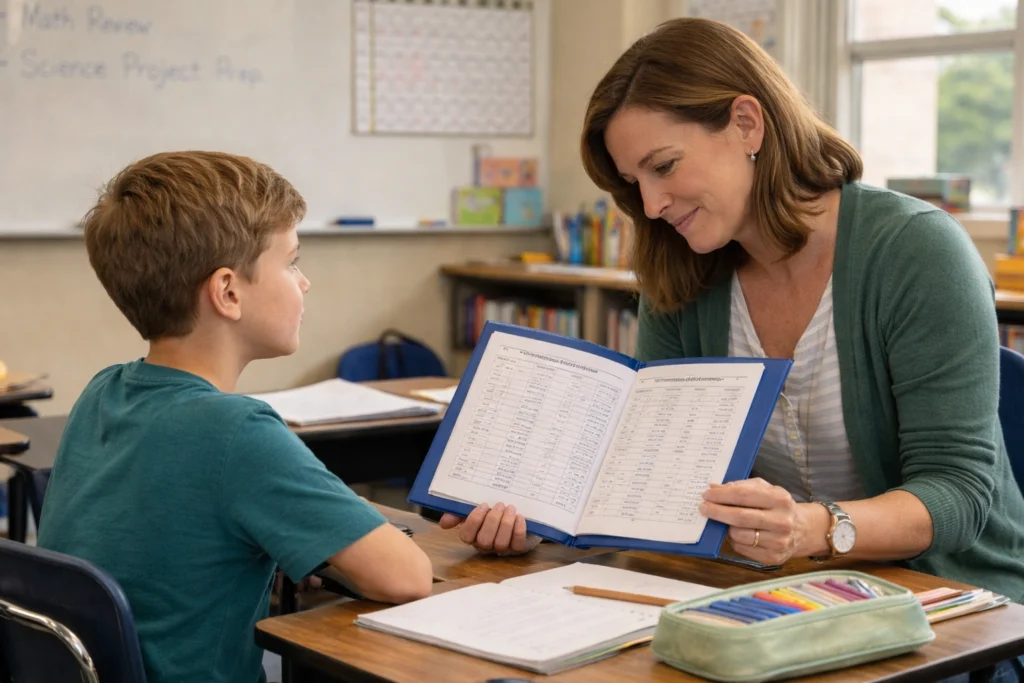
In our experience with hundreds of first-year educators, those who practice self-reflection improve faster than teachers who just hope things get better. A teaching journal helps you identify trends in student performance data that reveal whether impatience stems from unrealistic expectations or preventable planning gaps.

For example, if math scores drop during afternoon lessons, maybe students need movement breaks rather than harder consequences. Self-evaluation can make you a better teacher by helping you bite the bullet and honestly assess personal stress management.

That means separating teaching challenges from outside life pressures affecting classroom responses. Fellow educators and school leaders in the education industry emphasize this: identifying areas where your teaching practice needs adjustment prevents burnout before it starts.

Practical Ways to Strengthen Patience During the School Year

Now that you understand why patience breaks down, these methods work in actual classrooms during the school year. Teachers who apply even one of these techniques see improvement within weeks.

Let’s look at what strengthens patience most effectively.

  • Differentiated instruction: Matching tasks to current abilities prevents frustration from forcing uniform expectations on students with different learning styles. Students learn at various speeds, so creating lesson plans with multiple entry points reduces the impatience that comes from constant reteaching. That’s why teachers using differentiated instruction see better outcomes because students engage at their actual grade level instead of pretending to keep up.
  • Engaging lessons: Building lessons with real-world examples and collaborative projects keeps students focused, reducing off-task behaviors that test patience the most. Effective teaching habits include tech integration and hands-on learning experience options that improve student outcomes naturally. Now here’s where it gets tricky: when students see why content matters beyond tests, student engagement rises and classroom disruptions drop on their own.
  • Three-second pauses: Taking quick pauses before responding to disruptions prevents reactive comments that escalate minor situations into major problems. This simple teaching practice gives you time to assess whether a student legitimately needs help or just wants attention. The thing here is that teachers who pause first engage students more effectively because responses feel measured rather than emotional, improving the entire learning environment.
  • Backup activities: Creating enrichment teaching materials for fast finishers stops boredom behaviors before they start testing classroom limits (annoying, but necessary). Students who complete work early often distract others or lose focus entirely during the school year. What’s more, having meaningful feedback-ready extension activities keeps the classroom productive and reduces patience-testing moments throughout daily instructional strategies.

Pro tip: Start with just the three-second pause technique this week. What we can assure is that once pausing becomes automatic, add one differentiated instruction element to your existing lesson plans for immediate results.

From Surviving to Thriving: The Growth Mindset Shift

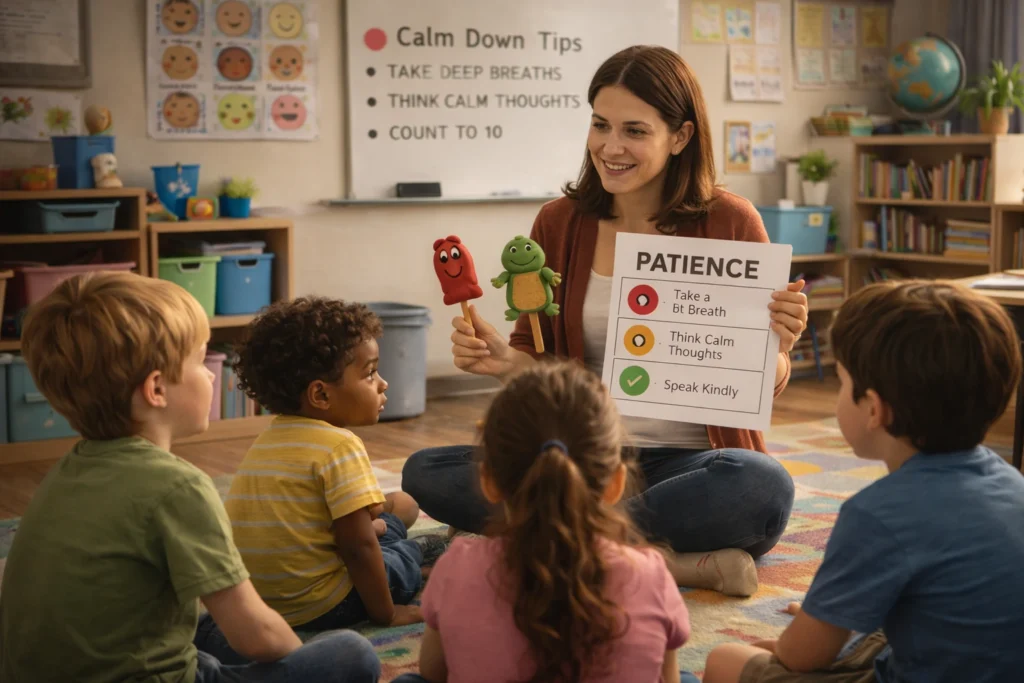
Teacher teaching kids how to deal with impatience

Patience becomes easier once you stop viewing impatience as a character flaw and start treating it like any other teachable skill. Think about it this way: a growth mindset changes how teachers approach patience struggles entirely. Viewing patience as learnable improves the feeling of possibility instead of hopelessness.

Teachers who adopt a growth mindset about their professional growth handle classroom challenges differently. Students thrive in learning environments where teachers model growth mindset thinking by admitting struggles and working through them openly. That’s why recognizing first-year struggles as normal reduces shame around having patience problems initially.

Each difficult interaction becomes practice when a growth mindset guides perspective. This shift creates a shared purpose between teachers and students: everyone’s learning together, and that’s an essential part of maintaining a healthy work-life balance in this demanding profession.

Your Next Step in Professional Development

Patience grows through intentional practice, not magical personality changes or waiting for easier students. Teachers who strengthen this teaching skill see improvements in both classroom management and student outcomes within weeks. At the end of the day, professional development in patience directly impacts your teaching career success more than any curriculum choice.

Starting with one small adjustment, like pausing before responding, creates measurable improvement fast. Self-evaluation shows which techniques work best for your specific classroom challenges. These teaching skills compound over time, leading to better student outcomes and academic success for everyone.

On the Culture is here to help you with practical strategies built for real classrooms. Keep an eye on our website to get more insights on developing the teaching skills that are actually necessary for your professional development journey.

Teacher Readiness

The Signals That Show You Are Ready to Become a Teacher

You can’t measure teacher readiness with a test or a checklist. It shows in how you handle lessons that don’t go as planned and students who aren’t engaged. Some people step into a classroom and immediately know they’re meant to become a teacher, while others take years to recognize this signal.

Generally, people arrive at teaching through different paths, depending on experience and opportunity. Yet some common patterns appear among teachers who succeed over the long term.

This article walks you through those concrete signs and patterns that clarify whether you’re actually ready for a teaching career. Plus, you’ll learn what separates genuine readiness from passing interest, and how your experiences so far have been quietly preparing you for education.

So, let’s dig in.

Your Teaching Experience Tells the Real Story

Your Teaching Experience Tells the Real Story

The hours you’ve spent in a real classroom reveal more about your readiness than any certification test ever could. It’s because teaching experience builds instincts that you can’t get from textbooks or online courses.

Now, if you’re wondering what real readiness looks like, these experiences are usually a good indicator:

You’ve Logged Real Classroom Hours

You can consider yourself ready when you’ve spent time observing or assisting in classrooms, not just reading about teaching practices from a distance. That’s because real classroom hours give you a sense of pacing, student dynamics, and how lessons actually unfold throughout the day.

With this approach, the difference between theory and practice becomes obvious quickly. For instance, you watch a teacher redirect a distracted student with just a look, or you see how a well-planned lesson can still flop if the timing’s off.

In a real classroom, you’ve also seen what works and what doesn’t. That exposure gradually builds genuine confidence. And trust us, you can’t learn that kind of timing from a textbook, because real classrooms rarely match training scenarios.

Student Teaching Felt Natural, Not Forced

During teaching, you felt excited to create lesson plans instead of feeling overwhelmed by them. At the same time, managing your own classroom felt natural, not like you were faking it or playing a role you hadn’t earned. You also connected with students easily, and classroom management came more naturally than expected.

Drawing from our experience working with new teachers, all these natural flows are the strongest readiness indicators.

Quick tip: When lesson planning stops feeling like homework and starts feeling like preparation, you know you’re on the right track.

You Handled Chaos Without Losing Your Cool

When unexpected disruptions happened (fire drills, tech failures, student meltdowns), you adapted quickly instead of panicking or freezing up completely. At that moment, you stayed calm and redirected the class without needing constant guidance from a mentor or supervising teacher.

Those chaotic moments taught you flexibility, and you actually grew from them rather than questioning your career choice.

That’s how teaching involves daily curveballs, and your ability to handle them without falling apart shows you’ve developed the resilience that teachers need. This support during messy moments often marks the difference between teachers who grow and those who struggle over time.

The Mindset Shift: When You Stop Hoping and Start Knowing

Have you ever noticed yourself thinking like a teacher even when you’re not in a classroom? This shift happens gradually, but it’s one of the clearest signs that you’re ready.

Here’s what that looks like:

  • The Reality of Teaching Doesn’t Scare You off Anymore: You’ve moved past romanticizing the job and now understand the chore (early mornings, grading, parent emails). And you’re still in. Most importantly, professional development feels like a natural part of your career, not an obstacle.
  • Challenges Become Puzzles, not Deal-Breakers: Difficult students or tight school budgets don’t shake your confidence anymore. Because now you learn to see setbacks as part of the job. That mindset takes time, but you’ll know when it clicks.
  • Your Curiosity About Student Progress Runs Deep: You’re genuinely interested in how students learn, not just checking boxes to finish a certification program. Based on our firsthand experience supporting aspiring teachers, this curiosity pushes you toward being a great teacher.
  • Other Educators Become Resources, not Competition: Now, you’ve stopped comparing yourself to veteran teachers. Instead, you ask questions, observe their teaching practices, and build on the knowledge around you while staying true to your style.

Verdict: When these mindset markers show up naturally, you’re not just interested in teaching. You’re ready for it.

Finding Your Lane: High School, Preschool Teacher, or Beyond

Finding Your Lane: High School, Preschool Teacher, or Beyond

The best part about exploring different teaching paths is that you can easily discover where your energy naturally flows. Because when a grade level drains your energy, enthusiasm doesn’t come naturally, and students sense it right away.

Here’s how teachers often identify the roles and settings that suit them most.

You Know Which Age Group Pulls You In

Eventually, you’ll know which age group suits you the best. The energetic younger kids or older students who enjoy deeper discussions. It usually depends on where you are comfortable.

At times, you might feel most engaged in an elementary classroom filled with songs and story time. At other times, you may find that high school students who enjoy debating complex ideas hold your attention.

This decision lies in your energy level, patience, and teaching style, which will naturally align with a specific age range once you test through actual classroom time.

Remember: You shouldn’t choose an age group simply because it seems easier or because someone says middle school teachers are in demand. You need to feel a genuine connection with students at that stage of development.

From Preschool Teacher to College Professor

You can consider the full teaching spectrum and choose where you fit best. But the teaching spectrum is wider than most people realize when they first consider education.

For example, a preschool teacher spends the day building social skills and managing snack time. At the other end of the spectrum, a college professor focuses on deep subject-area expertise and curriculum development in higher education.

That means if you’re drawn to being a preschool teacher, you value creativity and nurturing young minds. When the role of college professor appeals to you, it’s often because you enjoy a specialised curriculum and working with adult learners in higher education.

Taken together, these preferences create a career vision for you that is built around the environment, student interaction, and daily activities. Plus, it suits your strengths.

Continuing Education and the School Principal Path

You’re open to continuing education through advanced degrees, national board certification, and professional development workshops. However, that openness often goes hand in hand with thinking about where teaching might lead over time.

A few teachers choose to remain in the classroom throughout their careers, while others move toward leadership roles such as school administration or becoming a principal. Here, both paths offer solid and long-term options.

Sometimes, leadership roles like becoming a school principal or working in a district office catch your interest. Other times, you feel just as satisfied focusing on your own classroom. Either way, you’ve given it real thought.

Beyond these, you see teaching as a long-term career with room to grow, not a short stop before something else comes along.

What Makes Teaching the Right Career Choice

Teaching stops being just another job option when it starts answering questions about who you want to be. Over time, you realize teaching is more than a good career choice (it’s the right one). Because it aligns with your values and skills in ways other jobs never could.

So what’s the real deal here? Well, the thought of supporting students and watching your students progress motivates you more than higher salaries or corporate perks could in other careers. That is significant since teaching isn’t the kind of job you can get through on minimal effort.

Teaching will be the right choice if your personal goals match the work teachers normally do, including building relationships, supporting students, and helping shape the next generation.

This way, when teaching stops feeling like a compromise and starts feeling like the obvious choice, you’ve found your answer.

What Makes Teaching the Right Career Choice

Ready to Take the Leap? Start Here

Teacher readiness shows up in ways you might already recognize in yourself. The classroom hours, the natural connection with students, and the mindset that treats challenges as problems to solve. These signals tell you something important about your future in education.

If most of the mentioned signs sound familiar, you’re closer to becoming a teacher than you might think. Next, the path forward involves these actions: researching programs, talking to other educators, and taking concrete steps toward your teaching career.

Are you exploring opportunities in your local school district or considering teaching overseas? On The Culture offers guidance for teachers at every stage, from certification questions to building your career in the classroom.

Check out our other posts today to keep moving forward.