

The habits you build during your first week of teaching can influence your classroom for the rest of the year. That’s why those first few days matter so much. If your students feel safe, respected, and supported from the start, they’ll be more likely to stay focused, follow your lead, and enjoy the learning process.
A positive learning environment starts with clear routines, calm responses, and steady follow-through. The way you greet students at the door or respond when the room gets noisy shows them what kind of space they’re in. Also, it shows what you expect and how they can expect to be treated in return.
In this guide, you’ll find simple ways to create that kind of space from day one. You’ll learn teaching strategies that work, fun activities that help students connect, and routines that make your class run smoothly.
Read on to learn how to make your first week clear, confident, and enjoyable.
What Are the 5 Teaching Strategies That Work Best?
The five best teaching strategies include direct instruction, inquiry-based learning, cooperative learning, differentiated instruction, and reflective teaching. These techniques help you explain clearly, keep students involved, and adjust your teaching to meet their needs.
Not sure where to start with your lesson plans? These are great tools to build trust, stay organized, and keep students engaged.

- Direct instruction: Use this approach when you need to explain something clearly and step by step. Begin with a goal, model how to do the task, and check in along the way to see if students understand. It works well when time is short and you need everyone on the same page. Add a quick question or mini-activity to keep things active.
- Inquiry-based learning: Instead of giving all the answers, let students ask questions and explore ideas first. This approach works especially well for science, open-ended writing, or class discussions. It also helps students think for themselves and feel proud of what they discover. You can still guide them with prompts or helpful tools as they work through it.
- Cooperative learning: Students often do better when they work together. Small group tasks, pair work, or peer feedback keep things interactive. Make sure each student has a clear role so that everyone is involved. Rotate groups regularly to keep things fresh and help students build stronger class relationships.
- Differentiated instruction: Students learn in different ways. Some need visual examples. Others do better with hands-on tasks or extra time. This strategy means giving students more than one way to learn the same thing. Offer choices when you can and adjust tasks to match different needs. It keeps everyone moving forward at their own pace.
- Reflective teaching: After class, take a minute to think about what worked and what could’ve gone better. Ask yourself simple questions like whether your students understood the lesson or if the pace was right. Jotting down a few quick notes can make planning easier next time without needing a full rework.
These are strategies that come up again and again in trusted sources, including plenty of research backed by Google Scholar. They’re popular because they work in everyday classrooms.
Pro tip: Pick one strategy to try this week. See how your class responds. If it works, build on it. But if it doesn’t, tweak and try again. That’s how good teaching grows.
You’ve got some strong tools in your toolkit now. Next, we’ll look at how to turn these ideas into classroom activities that get your students involved right away.
Fruitful Engagement Activities in the Classroom
Classroom engagement makes the students feel involved, interested, and connected to the learning space. When students feel seen, they’re more likely to contribute and less likely to tune out. The right activities can change how your students show up, starting on day one.
Follow these engagement activities in your classroom:
- Warm-ups: Try asking, “What’s one thing that made you smile this week?” Let students share out loud or in small groups. This helps break the ice, lowers tension, and gives you a small window into how your students are doing emotionally. Plus, it signals that their feelings matter.
- Quick team challenges: Give each group a small stack of paper, tape, and string. Ask them to build the tallest freestanding tower in five minutes. This activity builds teamwork and gets students moving and talking. There’s no pressure to be right, just a chance to solve something together.
- Creative self-expression: Have students write one word that describes themselves on a sticky note and place it on a wall. You might see words like “kind,” “resilient,” or “brave.” Over time, that wall becomes a visual reminder of who your students are and what they value in themselves.
- Get them moving: Ask a fun question like, “Which snack wins? Popcorn? Fruit? Or chocolate?” Assign each answer to a different corner of the room and have students walk to their pick. This keeps things light and gives even shy students a way to participate without saying a word.
Even the U.S. Department of Education backs this up. When students feel like they belong and can take part in class activities, they’re more likely to show up and stay engaged.
One teacher we know used “corner voting” every morning during the first week. She noticed that her quieter students slowly started joining conversations. It helped her spot who needed encouragement and who could take the lead in group work.
Once you start seeing how students engage, you’ll also start to notice how they learn best. That’s exactly what we’ll explore next.
4 Ways of Learning Every Teacher Should Know
Every student learns in their own way. Some need to see it. Others need to hear, write, or move with it. Teaching with these differences in mind helps more students feel comfortable and succeed in class.
There are four main types of learners. You’ll likely have a mix of all of them in your room. Knowing what works best for each one makes it easier to adjust your lessons without needing a full overhaul.

Here’s how to work with each learning type in your classroom:
Visual learners
These students learn best when they can see how ideas connect. Use mind maps, timelines, or flowcharts to show relationships between concepts.
Hang anchor charts around the room and use colors to group similar ideas. Even drawing a quick sketch on the board while you talk helps them focus and remember more.
Auditory learners
Have you ever noticed a student who remembers everything from a class discussion but forgets what’s on the worksheet? That’s an auditory learner.
Let them talk it out in pairs, explain concepts aloud, or record voice notes. Songs, rhymes, and simple repetition also help. You can even invite them to teach the class, which boosts their confidence and locks in learning.
Reading/Writing learners
Some students don’t speak up, but their notebooks are gold. Give them clear instructions, textbook examples, and chances to reflect in journals.
Let them rewrite what they learned in their own words. These learners work well with quiet time and appreciate structure during lessons.
Kinesthetic learners
These learners like to move. They understand best when they’re doing something with their hands or bodies. Use tools like flashcards, puzzles, or small objects they can sort or build with. Create lessons that let them move between stations or act things out. Even letting them stand up during a task can help them focus better.
We suggest rotating your teaching methods weekly so each learning style gets attention. That way, more students feel like your lessons are built for them, and they stay more engaged.
When your classroom supports these different learning types, students feel seen and valued. And that leads straight into building a more positive space every day.
How to Create a Positive Classroom Environment That Lasts
A positive learning environment starts with respect, trust, and small routines that make students feel safe. You don’t have to be the fun teacher or turn every lesson into a show. What matters most is that students know they’re welcome, supported, and treated fairly. When that’s in place, everything else (like focus, behavior, and even grades) starts to improve.
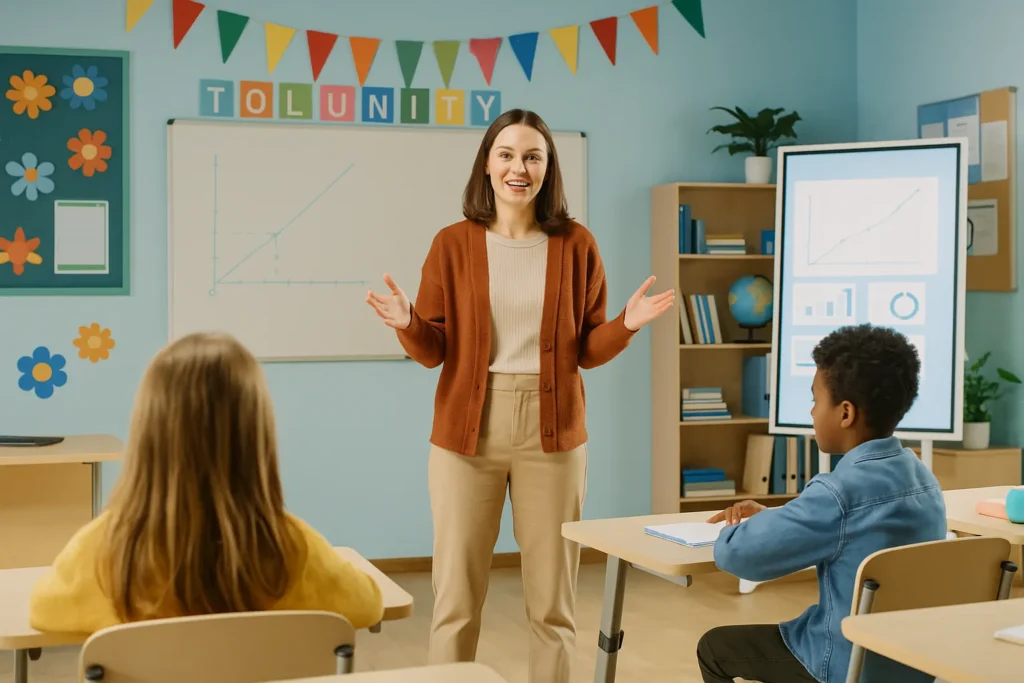
Here are some creative ways to start building a positive classroom environment:
- Greet every student, every day: Saying “Good morning” or “I’m happy to see you” might feel like a small thing, but it shows students that they’re important. It sets the tone for a calmer, more connected classroom. Even a quick smile as they walk in can help students feel more at ease.
- Set norms that model respect: Instead of a long list of rules, talk with your students about how the classroom should feel. Use phrases like “In this class, we listen to each other” or “We help one another.” Invite them to help make these norms.
- Celebrate small wins: When you notice a student doing something positive, say it out loud. It could be a quiet thank you, a kind sticky note, or a quick class shout-out. You can also start a “Friday Wins” list and let students nominate classmates who helped out or tried hard. It turns the spotlight toward effort and kindness.
- Be consistent with routines: Routines help students feel more in control. When they know what to expect, they’re less anxious and more ready to learn. So, keep your schedule visible and try not to change things at the last minute. A stable routine makes your room feel safe, especially for students who need extra structure.
One middle school teacher we know used a “Today’s High Five” board. Every day, he chose five students who had shown effort or kindness. Within two weeks, his class energy changed, and students were cheering each other on.
Now that the space feels right, let’s look at how to handle behavior in a way that’s calm, clear, and easy to manage.
Classroom Management Strategies for a Smooth Start
Classroom management is how you set up your class so that learning can happen without constant interruptions. It’s not just about keeping order. It’s about putting systems in place that help your students know what to do, when to do it, and how to stay on track.
Let’s start with expectations. Instead of handing out a rule sheet, have a short class conversation. Ask how they want the room to feel. Say things like “In this class, we speak kindly” or “We help each other out.” When students help shape the ground rules, they’re more likely to stick with them.
That sets the tone, but the routines hold everything together. Make sure students know what to expect each day. What should they do when they walk in? Where do assignments go? Post the daily schedule where it’s easy to see. A clear plan helps students stay focused without having to ask, “What now?” every few minutes.
Now let’s talk about what happens when someone goes off track. Instead of stopping everything to correct them, try a calm, quiet approach. A gentle redirection or a quick check-in works better than calling someone out in front of the class. It keeps things moving and protects the student’s dignity.
You can also guide behavior by pointing out what’s going well. For example, say, “I see Emily is ready with her materials,” or “Malik’s group is already on task.” This kind of positive narration shows the class what’s expected without turning it into a warning.

To help things run even more smoothly, lock in your core routines early. Here are some worth setting up in week one:
- Entry and exit routines
- Morning warm-ups
- Attention-getting signals
- How to handle materials and handouts
- Transition steps between activities
And don’t forget about your layout. Leave space to walk between desks. Just moving closer to a chatty group can help quiet things down. One teacher told us her silent “walk-by” worked better than most verbal warnings. Turns out, just being nearby is enough to help students stay on track.
Stay Consistent in Building a Positive Learning Space
You already have what you need to create a classroom where students feel encouraged, supported, and ready to grow. With clear routines, thoughtful planning, and flexible teaching strategies, you’re helping your students succeed one day at a time.
These ideas work well in the first week of school, but they are just as useful later on. If your classroom starts to feel overwhelming, coming back to these basics can help you reset. With the right habits in place, your space can feel calm, organized, and welcoming.
If you’re looking for more ideas, ready-to-use tools, or extra support, visit ontheculture.com. We’re here to help you build a learning space that supports your students and works for you.
Now’s a great time to take what you’ve learned and put it into action. Keep things simple, stay consistent, and trust that the little things you do each day do matter.


