Student focus isn’t about overhauling your lesson plans. Most teachers don’t have time for that anyway.
The truth is, small adjustments make the biggest difference. A two-minute routine here, a silent hand signal there, and suddenly you’re teaching engaged students instead of wandering minds.
I’m Bill Jason, and I’ve spent over 20 years as a teacher figuring out what actually works.
These six teaching strategies require no special training and work tomorrow. They’re tweaks that stick because they’re simple:
- Two-minute paper routines that settle chaotic energy
- The 10-2 rule for resetting attention spans
- Visual timers that make time concrete
- 30-second brain dumps before hard concepts
- Silent hand signals that reclaim attention
- Breaking big tasks into three chunks
Let’s start with the easiest one.
Start Every Class With Two Minutes of Paper Time
You know that chaotic energy when students first walk in? Backpacks dropping, conversations finishing, minds still in the hallway. Instead of fighting it, channel it. Give them two minutes to write anything on paper: yesterday’s lesson summary, burning questions, or even doodles that connect to your subject.
Moving a pen across paper does something typing can’t. A 2024 study from the Norwegian University of Science and Technology found that handwriting creates widespread neural connectivity, stimulating more of the brain and priming students to absorb new information.

Try this strategy tomorrow. Hand out paper as they walk in, set a timer, and watch how it helps settle the room
Use the 10-2 Rule to Reset Attention Spans
Even your most focused students hit a wall after about 10 minutes of listening. They’re not trying to be rude (maybe some are in their rebellious phase). Their brains just need a reset.
Here’s what to do: After every 10 minutes of instruction, give students 2 minutes to process. They can turn and talk with a partner, jot down three key points, sketch the concept, or even do ten jumping jacks if energy is low. Then you return to teaching.
As Dr John Medina, a leading expert in brain development and cognition, says in his best-selling book Brain Rules, “The brain needs a break to process information effectively. Attention drops dramatically after about 10 minutes of passive listening.”
Set a timer on your phone and follow the 10-2 rhythm. Students retain more, zone out less, and even the afternoon slump feels more manageable.
Make Time Visible With Visual Countdown Timers
Saying “you have 15 minutes” doesn’t mean much to students who can’t see time passing. Visual timers turn an abstract concept into something students can actually see.
Use either a physical Time Timer with a red disappearing disk or project a browser-based countdown on your board. Students glance up and instantly know how much time remains. Give verbal warnings at the two-minute and 30-second marks, but let the visual do most of the work.
Students pace themselves better during independent work. They buckle down as the red section shrinks instead of panicking at the last minute. It’s a small tool with outsized impact.
Start Hard Concepts With a 30-Second Brain Dump
A few years ago, one of my students told me she always felt lost whenever I introduced a new concept. Her brain needed a minute to catch up, but by then I’d already moved ahead.
That’s when I started 30-second brain dumps. Before a tricky topic, like solving quadratic equations or analysing symbolism in poetry, I give students 30 seconds to jot down everything they already know. Anything goes. Misspellings don’t matter. Half-formed thoughts are fine.
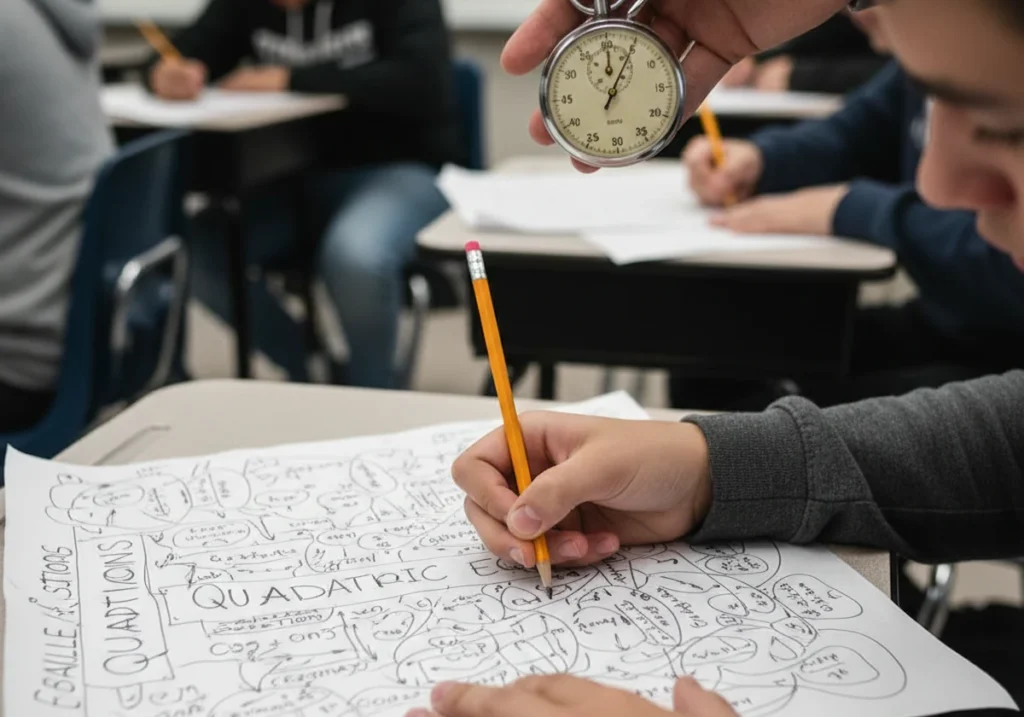
At first, the change wasn’t dramatic. But over time, students started asking sharper questions and making connections faster. They stopped staring blankly and jumped in right away.
It works because students activate what they already know before you add new information. They build on existing knowledge instead of starting from scratch.
Start tomorrow: give students 30 seconds to brain dump before the hard stuff and watch how much faster they engage.
Use the “Hands-Up, Hands-Down” Signal for Attention
You’ve been there. Mid-lesson, the room gets loud during partner work, and you need everyone back. Raising your voice feels exhausting, and saying “quiet down” three times never works.
Instead, raise your hand silently and wait. Students see it, mirror the gesture, and go quiet. No yelling. No repeating yourself.
The Responsive Classroom approach, used in thousands of schools, teaches this technique because visual cues paired with physical action work better than verbal commands. Students can’t talk while holding their hands up, and the silence spreads naturally across the room.
Practice it once at the start of class so students know what it means. Then use it consistently. Within a week, you should be able to reclaim attention in under 10 seconds instead of losing two minutes to “guys, listen up” cycles.
Give it a try tomorrow during your noisiest transition.
Break Big Tasks Into Three Manageable Chunks
Hand a student a five-paragraph essay, and their expression freezes. The task feels massive. They don’t know where to start, so they stare at the blank page and lose focus before they’ve written a word.

The fix is simple. Break big tasks into three clear chunks like this:
- Brainstorm and outline
- Write the body paragraphs
- Draft the introduction and conclusion, then edit
Each chunk feels achievable, so students stay focused and actually finish more work. They build momentum instead of shutting down. Next time you assign something big, try this approach. You’ll likely notice better focus and more consistent progress.
Small Tweaks, Real Impact
I’ve used every one of these strategies for years. They’ve worked in my classroom, and they’ll work in yours.
You don’t have to master them all at once. Start with one tomorrow, see how it goes, then add another when you’re ready.
Results don’t happen in a day, but small changes add up fast.
I share more teaching strategies like these on On The Culture. Check it out if you found these tips helpful.