
Why Good Teachers Never Stop Being Students

Why Good Teachers Never Stop Being Students

Good teachers never stop being students because the classroom keeps changing around them. New research comes out, students need to change, and teaching methods improve over time. So the educators who do well are usually the ones who stay curious and keep learning.

But a lot of teachers who want to develop new strategies feel stuck because there’s not enough time, resources, or support to make it happen. If you’re one of these educators, then you’re in the right place.

In this article, we’ll talk about why teacher learning is so important, how you can build it into your routine, and how it can help students, too. You’ll also find practical ideas you can actually use, even when your schedule is packed.

First, we’ll look at what makes professional development effective.

How to Make Teacher Professional Development Truly Effective

How to Make Teacher Professional Development Truly Effective

Professional development is most effective when it connects to what teachers do in the classroom every day. Like we mentioned before, generic training sessions often fail because they do not relate to real teaching challenges. The goal should be growth that feels useful.

So let’s look at what gets in the way and what actually helps.

Why Traditional Professional Development Falls Short

Most one-time workshops do not create lasting change because they do not connect to everyday classroom work. Teachers sit through generic sessions, take a few notes, and then go back to their routines with no real follow-up.

We’ve noticed that this kind of compliance-driven training is what frustrates educators who genuinely want to improve. If professional development feels like just a task to complete, it will be hard to stay motivated.

That’s why, over time, many teachers stop expecting much from these sessions at all.

What Effective Professional Development Actually Looks Like

Effective programs look very different from traditional workshops. For starters, they spread out over time instead of being squeezed into a single afternoon. Research from the Learning Policy Institute shows that strong teacher learning is focused on content, hands-on, and built into the school day.

Teachers will also need time to reflect and get honest feedback from peers. This is how you can make professional development stop feeling like a chore.

Supporting New Teachers Without Overwhelming Them

New teachers have a lot to learn at the start (like classroom management, lesson planning, and student needs), so throwing too much at them quickly can backfire. We’ve found that mentoring, coaching, and structured guidance from experienced colleagues is what helps most in these early stages of a teacher’s career.

Also, at this stage, it’s more important to build confidence than to cover a lot of content. Schools that foster a supportive culture help new teachers develop a growth mindset. This mindset allows them to move beyond just surviving each week and start improving their skills over time.

Building Continuous Teacher Growth Into Your Daily Routine

Building Continuous Teacher Growth Into Your Daily Routine

Continuous growth doesn’t always come from formal training or big events. Much of the best learning for teachers happens during the regular school day.

Here are some practical ways you can build learning into your day without adding extra work to your schedule.

Teacher Learning Happens Between the Big Moments

You’ll notice that some of the most valuable growth happens in small, informal ways that don’t feel like learning. For example, you might adjust a lesson when students seem confused, ask a new question to spark discussion, or watch how students respond during group work.

Pay attention to these moments because they connect directly to your teaching practice. Once you start noticing these small moments, learning will become part of your daily routine.

Building New Skills Without Reinventing Your Practice

Now, you don’t have to overhaul everything to develop new skills. In fact, like we mentioned, trying to change too much at once usually backfires and can leave you feeling burnt out.

A better approach is to test new strategies in small, low-risk ways and see what happens. You can pick one skill or approach at a time, like setting up small group discussions for reading comprehension, before moving on.

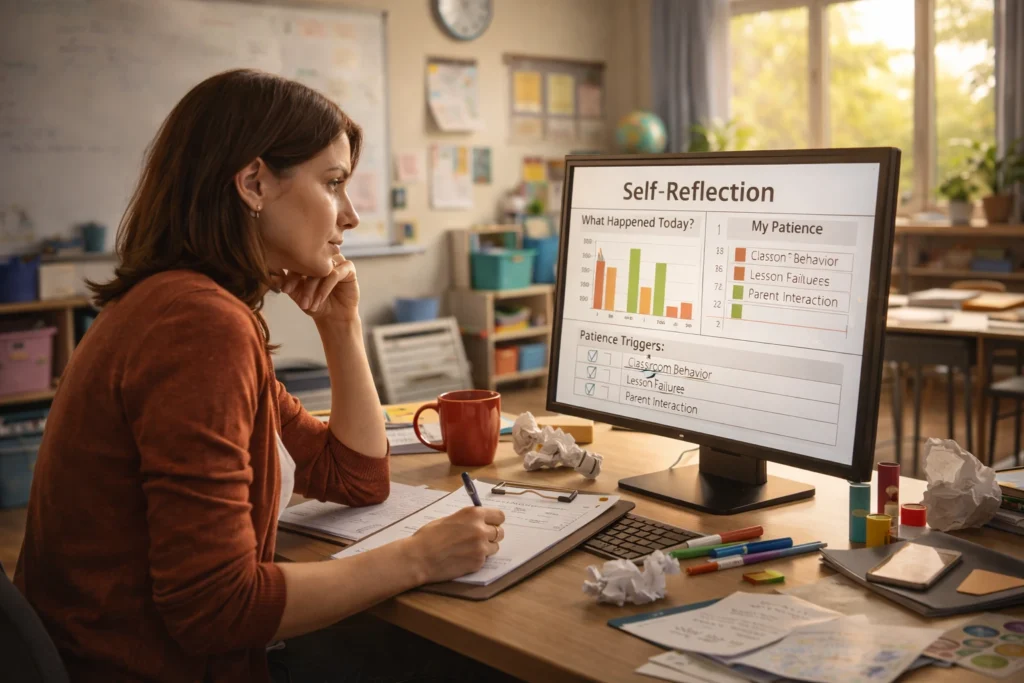
Then you can reflect on them in brief sessions that you can easily fit into your daily life. Even a few minutes at the end of the day can help you notice patterns and make lasting improvements.

Overcoming the Biggest Barriers to Growth

Time is the biggest challenge for most teachers, but micro-learning and quick reflection let you grow even in a busy schedule.

For example, you can review a short article on classroom strategies, watch a brief teaching video, or note one thing that went well in a lesson. And when you feel overwhelmed, try to focus on any progress you made.

Isolation is another common barrier, and collaboration is often the best fix for it. You can work with colleagues, share ideas, and solve problems together to make the learning feel less lonely. Over time, this kind of support will help you build a stronger educator mindset and lasting professional confidence.

The Growth Mindset Every Teacher Needs

The Growth Mindset Every Teacher Needs

So, what’s one thing you’ve learned recently that changed how you teach? It’s a simple question, but the answer can tell you a lot about where you are right now.

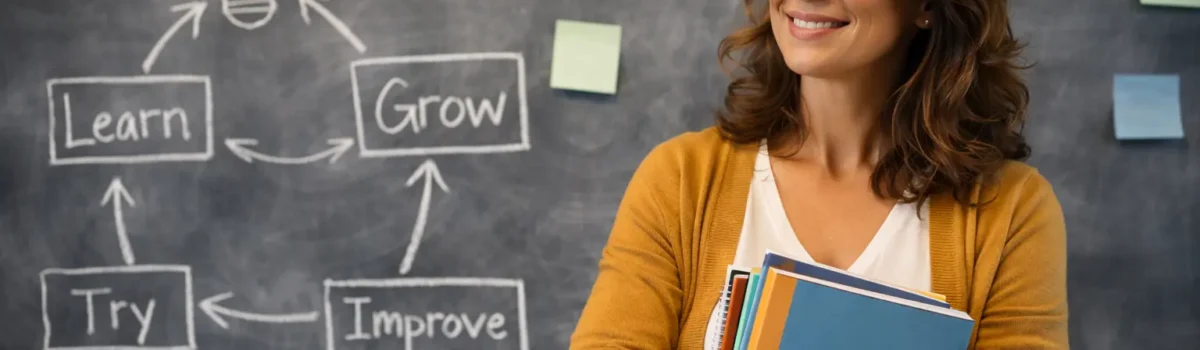
Remember that teachers who commit to continuous growth get better at their jobs and become role models for the very mindset they want their students to have. When you show up curious and willing to learn, your students will notice. That kind of example stays with them long after they leave your classroom.

And if you invest in your teaching practice, you’ll also feel more confident and more connected to your work. Your students will benefit, too, because they get a teacher who cares about getting better.

For more ideas on building a strong educator mindset, visit On the Culture.

Teaching Reality beyond classrooms

What Teaching Looks Like Beyond the Classroom Walls

Teaching basically looks like lesson plans that eat up your evenings, parent emails at 9 pm, and constant worry about students who need support. So teachers usually don’t clock out when classes end. The work spills into nights, following you home with grading, planning, and worrying about the kid who’s falling behind.

We get it because we’ve watched educators stretch themselves thin trying to do it all. And to help you manage better, here’s what we’ll cover:

  • The reality of teaching today
  • Hidden work that happens after school
  • Why emotional labor is now part of the job description
  • Technology’s role in your workload

Let’s break down what teaching really involves so you can see the complete picture.

What Does the Teaching Reality Look Like Today?

Teaching in reality is the mix of classroom instruction, emotional support, and family communication that fills a teacher’s day, other than teaching hours. The truth is that modern-day teaching holds extra job responsibilities that weren’t there before.

Teachers provide mental health support while managing behavior challenges. For instance, when a student shows up anxious or upset, you can’t dive straight into the math lesson. You need to pause, check in, and help them settle first.

Add in family outreach, data tracking, and community needs, and you’ve got a job that looks nothing like it did a decade ago. So, where does all this extra work happen?

Classroom Teaching vs. the Full Picture

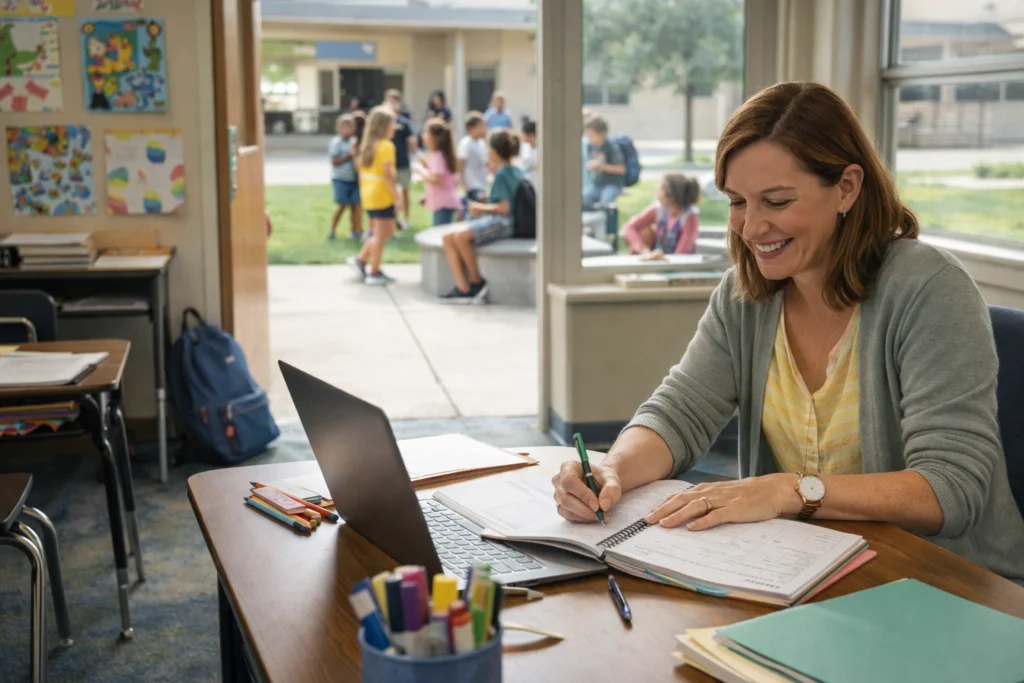
Teacher working on lesson plans

Ever wonder why teachers arrive early and leave late, even though classes end at 3 pm? The classroom part is only one piece of a much bigger puzzle. Here’s where all that extra time disappears.

Lesson Plans Take Hours Beyond Class Time

Lesson plans take serious work. Teachers research materials and align them with standards while preparing different approaches for diverse learners. Most of this happens in evenings and weekends when you’re designing activities that engage students.

Student Behavior Management Extends Past Dismissal

Student behavior issues don’t end at 3 pm. Teachers document what happened, then meet with parents and counselors to build intervention strategies. This classroom management needs relationship building and follow-up that stretches way past school hours.

Communication with Families Happens Around the Clock

Parents expect quick responses about grades, assignments, and what’s happening in class. When concerns arise, teachers coordinate conferences and address issues that pop up nights and weekends.

Now add in all the administrative work that keeps schools running.

The Unseen Workload

Beyond the classroom hours we just covered, there’s another layer of work most people never see. This unseen workload includes paperwork, training, and coordination that happens behind the scenes. Let’s dive into a detailed discussion:

Administrative Tasks and Documentation

Paperwork never really stops. Classroom teachers complete attendance records, grade reports, and compliance forms on a daily basis.

The sunny side to paperwork? It creates a clear record when incidents happen, so teachers document everything with contact logs and progress notes for school administrators.

Professional Development and Training Requirements

Schools require ongoing training on new teaching methods. To meet these requirements, teachers need to attend workshops. This professional development means reading research and trying new techniques in lessons.

Collaboration with Support Staff

Teachers work with support staff to address student needs. And during team meetings, educators share observations and build plans for struggling learners. The insights from colleagues help improve classroom strategies.

But all this work is still just the practical side of teaching.

Emotional Labor: Why Teachers Carry More Than Curriculum

The teacher waiting in a comforting counselling room

Research shows 62% of teachers now provide increased emotional support to students compared to pre-pandemic levels. When a child shows up dealing with problems at home, the lesson has to wait. You create space for them to feel safe first, which means listening and helping them settle before any learning happens.

You should also take notice of mood changes and encourage when students need it most. This emotional support includes mediating conflicts between children and connecting families with community resources when they need help.

And while teachers handle all this emotional work, technology keeps adding more to their plates.

How Technology Has Changed Teaching Responsibilities

Technology has completely changed teaching. Digital platforms, online grading, and constant connectivity now stretch teaching hours into evenings and weekends as well.

Take Google Classroom as an example. Teachers monitor it constantly for assignments and grades. When work goes live, questions flood in from students and parents through multiple channels at all hours.

However, tech issues pop up regularly. You will have to troubleshoot problems while teaching digitally and making sure every student can access the materials they need. These so-called helpful tools often create extra work.

But teachers don’t handle all these challenges alone.

What Support Systems Exist for Teachers?

Support staff, mentor programs, and professional learning communities create networks that help teachers manage their expanding responsibilities. Counselors, aides, and specialists handle student needs outside academics. These team members jump in when classroom challenges get overwhelming.

Like Mentor teachers, professional learning communities offer guidance on classroom management and curriculum planning. They’ve been through tough situations before, so their insights prove valuable. Let’s be honest, other educators get it. They face the same struggles, which makes their advice more useful than any handbook.

These support systems help, but flexibility stays important, and plans change constantly. So how do teachers manage when everything falls apart mid-lesson?

Balancing Preparation with Unexpected Demands

A fire drill disrupting a class

Teachers balance preparation with constant interruptions. You create detailed lesson plans knowing they’ll likely change halfway through the day. That’s because fire drills happen without warning, and student crises suddenly take priority over math class. And if an assembly pops up, your carefully timed lesson ends up stretching across two days.

Adjusting on the spot becomes routine. When students struggle mid-lesson, you switch gears to help them understand. Then behavioral situations pull you away from instruction. On top of that, urgent emails arrive during planning periods, and administrative requests consume time meant for grading.

That’s the full picture of what teaching involves outside the classroom.

Finding Your Footing in the Teaching Reality

Teaching reality stretches far past classroom instruction. The profession includes emotional support, administrative work, and constant communication that fills your nights and weekends. It demands more than most people realize, but solutions exist.

Support systems help, and setting boundaries protects your energy. Plus, advocating for resources can lighten the load. We’ve walked through what teaching looks like today, the hidden workload, emotional labor, technology’s impact, and the support systems available to help you manage it all.

Ready to explore more about the teaching profession? Our team at On the Culture will take you through every skill, strategy, and insight you need to build a successful teaching career. Let’s make teaching work for you.

How New Teachers Can Build Confidence Before Their First Job

How New Teachers Can Build Confidence Before Their First Job

New teachers can build confidence before their first job by focusing on preparation, skill development, and having the right mindset. You don’t need years of experience to feel ready for your first classroom. A clear plan and a willingness to learn can get you there.

A 2022 survey by the EdWeek Research Center found that 40% of teachers feel burnt out, with early career educators reporting the highest stress levels. A big part of this stress comes from common struggles like classroom management, lesson planning, and communication skills.

That said, confidence and experience are not the same thing. You can feel prepared even without years of teaching under your belt. The difference really comes down to how well you practice, how much you plan ahead, and how you respond to setbacks.

In this article, we’ll share our strategies to help you feel confident before your first teaching job. You’ll also learn which skills are most important and find a simple path to grow professionally.

First, we’ll walk through the basics that help build confidence early on.

How to Build Teaching Skills Before Your First Classroom Day

How to Build Teaching Skills Before Your First Classroom Day

Building teaching skills before your first job starts with observation, practice, and preparation. The more familiar you are with real classroom situations, the easier it will be to feel confident when it’s your turn to teach.

Here are some practical steps you can take right now.

Observe, Reflect, Improve

One of the best ways to learn is by watching experienced teachers do their thing. If you get the chance, visit a classroom and pay close attention to how the teacher handles different situations. For example, notice how they give instructions, manage disruptions, or help students who are struggling.

We also recommend bringing a teaching journal with you to write down what works and what doesn’t. Over time, these notes will become a helpful guide when you start planning your own lessons.

Try Micro-Teaching

Once you’ve spent some time observing, your next step is to practice on your own. Micro-teaching lets you do this without the pressure of handling a full classroom. The idea is to teach a short lesson to friends or family and ask for honest feedback.

You can also record yourself and watch it back later. Doing this will help you catch small habits you might miss in the moment, like speaking too quickly or forgetting to make eye contact.

Tech Confidence

These days, it’s also necessary to get comfortable with classroom technology. A good place to start is Google Classroom, which many schools already use.

From there, you can explore other mobile tools for educators, like Kahoot for quizzes, Seesaw for student portfolios, or ClassDojo for behavior tracking. We often notice that teachers who practice with tech before starting their jobs adapt much faster once they’re in the classroom.

Prepare Your Classroom Management Style

Another area to focus on is classroom management, which will help you create a positive learning environment. If your students feel safe and know what to expect, they’ll be more likely to participate.

So before your first day, spend some time thinking about how you’ll handle common disruptions like students not following instructions, or conflicts between classmates. Then plan your routines and set clear rules ahead of time. Having these systems ready means one less thing to stress about when you finally step into your own classroom.

Start Planning for Professional Development

Now you should be ready to practice building lesson plans before you need them. Lesson plans are the foundation of effective teaching, and creating one from scratch is a great way to prepare.

Start by picking a subject you feel comfortable with, then build a sample lesson with clear learning goals. Let’s say you chose math, focusing on fractions. You could then create a sample lesson with clear learning goals, like helping students learn to add and subtract fractions with like denominators.

After that, practice delivering your lesson while keeping an eye on time management. With a few practice sessions, you’ll learn to manage your time and won’t have to rush or worry about finishing your lesson.

How to Define Professional Growth (And Set Realistic Goals)

How to Define Professional Growth (And Set Realistic Goals)

Professional growth means building new skills and experiences that help you do better in your current position and move toward your career goals. For new teachers, this starts with honest self-reflection about where you are and where you want to be.

Let’s see how you can set the right goals for yourself.

What Is Professional Growth?

Professional growth means improving your skills and becoming more confident in your work over time. A lot of people assume professional growth is all about promotions or bigger paychecks. But it actually involves learning to look at your own work honestly so you can spot areas where you need to improve.

Where Do You Stand Today?

Before you can set meaningful goals, you need to know your starting point. Take a moment to think about your current strengths and weaknesses. Ask yourself: how are my communication skills? How do I improve my time management or leadership abilities?

Consider your teaching methods, too, and whether there are areas where you feel less sure of yourself. This kind of self-awareness will give you a better picture of where to focus your energy.

Set Goals That Will Get You Somewhere

After you’ve reflected on where you stand, your next step is to set goals that are clear and realistic. A helpful way to do this is by using the SMART framework.

SMART stands for Specific, Measurable, Achievable, Relevant, and Time-bound. Instead of a vague goal like “I want to get better at lesson planning,” you’ll try something more concrete. For example, “I will create three complete lesson plans by the end of next month.” Measurable goals like this are easier to track and keep you motivated along the way.

Learn to Welcome Feedback

Even with clear goals, it can be hard to know if you’re making progress on your own. That’s why feedback is so important. Constructive criticism, for instance, can help you see things you might miss by yourself.

It can feel awkward at first, but learning to accept feedback is one of the fastest ways you can grow. So ask your trusted friends, mentors, or colleagues to share their honest thoughts about your teaching style.

Join a Growth-Focused Community

You should also surround yourself with people who care about growing. A professional learning community, often called a PLC, is a great place to find this kind of support. These groups bring together educators who share ideas, talk through challenges, and encourage one another.

Being part of a community like this will also keep you motivated and remind you that others are going through similar experiences. Our team has found that teachers who connect with peers early in their careers tend to feel more confident and less alone.

Build Confidence for a Successful Teaching Career

Build Confidence for a Successful Teaching Career

We hope you’ve found a few ideas that make the road ahead feel a little less overwhelming. Building teacher confidence doesn’t happen overnight, but every small step you take will add up over time.

Before you jump into action, take a moment for some honest self-reflection. Ask yourself: what area makes me feel least confident right now? Maybe it’s classroom management, time management, or communication skills.

Whatever it is, identifying that one thing will give you a clear starting point. And once you know where to focus, moving forward will become much easier.

A simple way to stay on track is by creating a 30/60/90 day growth plan.

In your first 30 days, spend time observing classrooms and practicing micro-teaching with friends or family. During the next 30 days, you can set two or three measurable goals using the SMART framework we talked about earlier.

Then, by day 90, you can connect with a professional learning community and start asking for feedback on your progress. Small steps like these will help you grow professionally and build career satisfaction along the way.

For more tips on building a successful career in education, check out other resources at On the Culture.