

Teaching basically looks like lesson plans that eat up your evenings, parent emails at 9 pm, and constant worry about students who need support. So teachers usually don’t clock out when classes end. The work spills into nights, following you home with grading, planning, and worrying about the kid who’s falling behind.
We get it because we’ve watched educators stretch themselves thin trying to do it all. And to help you manage better, here’s what we’ll cover:
- The reality of teaching today
- Hidden work that happens after school
- Why emotional labor is now part of the job description
- Technology’s role in your workload
Let’s break down what teaching really involves so you can see the complete picture.
What Does the Teaching Reality Look Like Today?
Teaching in reality is the mix of classroom instruction, emotional support, and family communication that fills a teacher’s day, other than teaching hours. The truth is that modern-day teaching holds extra job responsibilities that weren’t there before.
Teachers provide mental health support while managing behavior challenges. For instance, when a student shows up anxious or upset, you can’t dive straight into the math lesson. You need to pause, check in, and help them settle first.
Add in family outreach, data tracking, and community needs, and you’ve got a job that looks nothing like it did a decade ago. So, where does all this extra work happen?
Classroom Teaching vs. the Full Picture
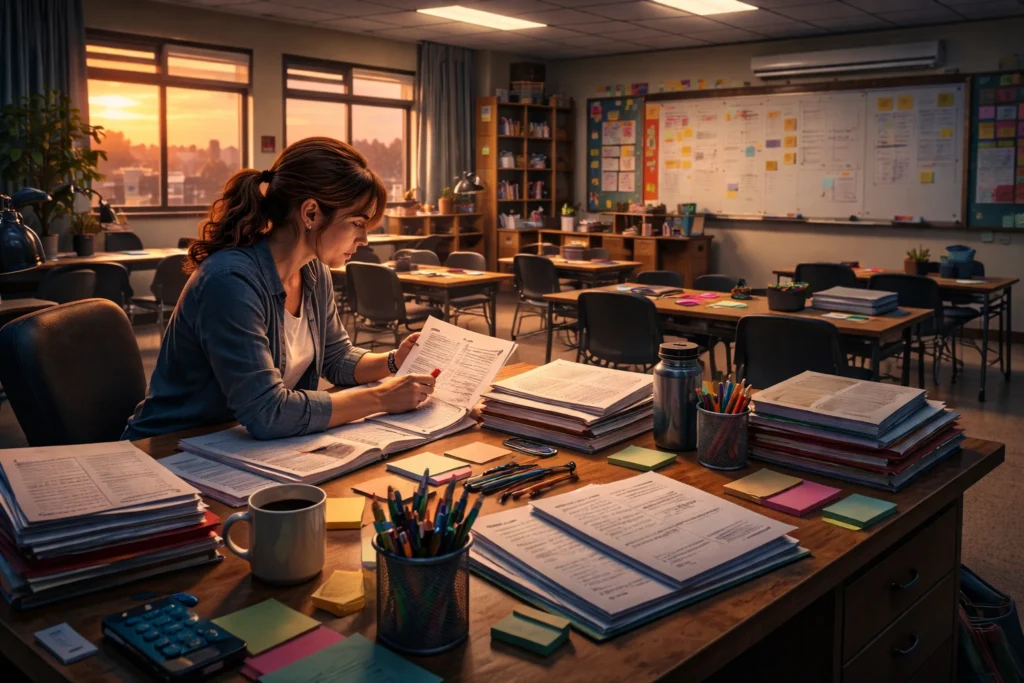
Ever wonder why teachers arrive early and leave late, even though classes end at 3 pm? The classroom part is only one piece of a much bigger puzzle. Here’s where all that extra time disappears.
Lesson Plans Take Hours Beyond Class Time
Lesson plans take serious work. Teachers research materials and align them with standards while preparing different approaches for diverse learners. Most of this happens in evenings and weekends when you’re designing activities that engage students.
Student Behavior Management Extends Past Dismissal
Student behavior issues don’t end at 3 pm. Teachers document what happened, then meet with parents and counselors to build intervention strategies. This classroom management needs relationship building and follow-up that stretches way past school hours.
Communication with Families Happens Around the Clock
Parents expect quick responses about grades, assignments, and what’s happening in class. When concerns arise, teachers coordinate conferences and address issues that pop up nights and weekends.
Now add in all the administrative work that keeps schools running.
The Unseen Workload
Beyond the classroom hours we just covered, there’s another layer of work most people never see. This unseen workload includes paperwork, training, and coordination that happens behind the scenes. Let’s dive into a detailed discussion:
Administrative Tasks and Documentation
Paperwork never really stops. Classroom teachers complete attendance records, grade reports, and compliance forms on a daily basis.
The sunny side to paperwork? It creates a clear record when incidents happen, so teachers document everything with contact logs and progress notes for school administrators.
Professional Development and Training Requirements
Schools require ongoing training on new teaching methods. To meet these requirements, teachers need to attend workshops. This professional development means reading research and trying new techniques in lessons.
Collaboration with Support Staff
Teachers work with support staff to address student needs. And during team meetings, educators share observations and build plans for struggling learners. The insights from colleagues help improve classroom strategies.
But all this work is still just the practical side of teaching.
Emotional Labor: Why Teachers Carry More Than Curriculum

Research shows 62% of teachers now provide increased emotional support to students compared to pre-pandemic levels. When a child shows up dealing with problems at home, the lesson has to wait. You create space for them to feel safe first, which means listening and helping them settle before any learning happens.
You should also take notice of mood changes and encourage when students need it most. This emotional support includes mediating conflicts between children and connecting families with community resources when they need help.
And while teachers handle all this emotional work, technology keeps adding more to their plates.
How Technology Has Changed Teaching Responsibilities
Technology has completely changed teaching. Digital platforms, online grading, and constant connectivity now stretch teaching hours into evenings and weekends as well.
Take Google Classroom as an example. Teachers monitor it constantly for assignments and grades. When work goes live, questions flood in from students and parents through multiple channels at all hours.
However, tech issues pop up regularly. You will have to troubleshoot problems while teaching digitally and making sure every student can access the materials they need. These so-called helpful tools often create extra work.
But teachers don’t handle all these challenges alone.
What Support Systems Exist for Teachers?
Support staff, mentor programs, and professional learning communities create networks that help teachers manage their expanding responsibilities. Counselors, aides, and specialists handle student needs outside academics. These team members jump in when classroom challenges get overwhelming.
Like Mentor teachers, professional learning communities offer guidance on classroom management and curriculum planning. They’ve been through tough situations before, so their insights prove valuable. Let’s be honest, other educators get it. They face the same struggles, which makes their advice more useful than any handbook.
These support systems help, but flexibility stays important, and plans change constantly. So how do teachers manage when everything falls apart mid-lesson?
Balancing Preparation with Unexpected Demands

Teachers balance preparation with constant interruptions. You create detailed lesson plans knowing they’ll likely change halfway through the day. That’s because fire drills happen without warning, and student crises suddenly take priority over math class. And if an assembly pops up, your carefully timed lesson ends up stretching across two days.
Adjusting on the spot becomes routine. When students struggle mid-lesson, you switch gears to help them understand. Then behavioral situations pull you away from instruction. On top of that, urgent emails arrive during planning periods, and administrative requests consume time meant for grading.
That’s the full picture of what teaching involves outside the classroom.
Finding Your Footing in the Teaching Reality
Teaching reality stretches far past classroom instruction. The profession includes emotional support, administrative work, and constant communication that fills your nights and weekends. It demands more than most people realize, but solutions exist.
Support systems help, and setting boundaries protects your energy. Plus, advocating for resources can lighten the load. We’ve walked through what teaching looks like today, the hidden workload, emotional labor, technology’s impact, and the support systems available to help you manage it all.
Ready to explore more about the teaching profession? Our team at On the Culture will take you through every skill, strategy, and insight you need to build a successful teaching career. Let’s make teaching work for you.